
How to File a Successful Roof Insurance Claim for Storm Damage
Understanding Your Coverage: What Roof Damage Insurance Actually Covers
When a storm tears through the Brookfield area, the damage to your roof happens in minutes. What follows is far more complex: navigating your insurance policy, documenting every shingle, and proving the claim to skeptical adjusters. We’ve helped hundreds of property owners turn storm damage into approved claims and quality repairs, and we want to share what we’ve learned so your process goes smoothly.
Filing a roof insurance claim doesn’t require a law degree, but it does require strategy. From the moment hail hits your roof to the final inspection, each step matters. Let us walk you through how to protect your claim, avoid common pitfalls, and work with insurers who understand your situation.
Your homeowners or commercial policy covers roof damage caused by sudden, accidental events. Most policies cover storm damage (hail, high winds, falling trees), fire, and impact from debris. What they typically do not cover is damage from age, poor maintenance, or gradual wear and tear.
The key distinction is “sudden and accidental.” If a tree limb fell last month and you ignored it, causing water damage this month, your insurer will likely deny the claim. Insurance companies view roof maintenance as the property owner’s responsibility. If your roof was already failing when the storm hit, you’re on your own.
Your policy also has a deductible. Most residential policies use a flat dollar amount (like $1,000), while some use a percentage of your home’s insured value (often 1-2% for wind or hail). A $300,000 home with a 1% deductible means you pay $3,000 before insurance kicks in. Understanding this number before filing prevents surprises later.
Coverage limits matter too. Your policy covers repair or replacement up to your dwelling’s insured value. If your roof replacement costs $18,000 and your dwelling coverage is only $250,000, you’re likely covered. But if your home is insured for $150,000 and the full replacement is $18,000, you may hit limits quickly, especially if other areas need repairs.
Action to take now: Pull your policy documents and note three things: your deductible amount, whether it’s a flat dollar amount or percentage, and your total dwelling coverage. Call your agent if these aren’t clear. This knowledge prevents confusion when you file.
Why Storm Damage Claims Often Get Denied and How We Help
Insurance companies approve claims when evidence is undeniable. They deny them when documentation is weak or when damage appears pre-existing. In our experience working alongside adjusters and homeowners, denial typically happens for one of three reasons.
First, poor documentation. A photo of your roof from 100 feet away proves nothing. Adjusters need close-up images showing the specific damage, the area affected, and proof it wasn’t there before. Without this, they’ll assume normal wear.
Second, delayed reporting. If you wait weeks or months to file, your roof may have deteriorated further or collected additional damage from weather. The timeline between the storm event and your claim matters. Adjusters view this gap skeptically and may argue that some damage occurred after the storm.
Third, lack of professional validation. Homeowners often describe damage incorrectly. You might say “shingles are missing,” but an adjuster needs to know if it’s one shingle or fifty, if it’s widespread or isolated, and if the underlying structure is damaged. A professional roof inspection report removes guesswork.
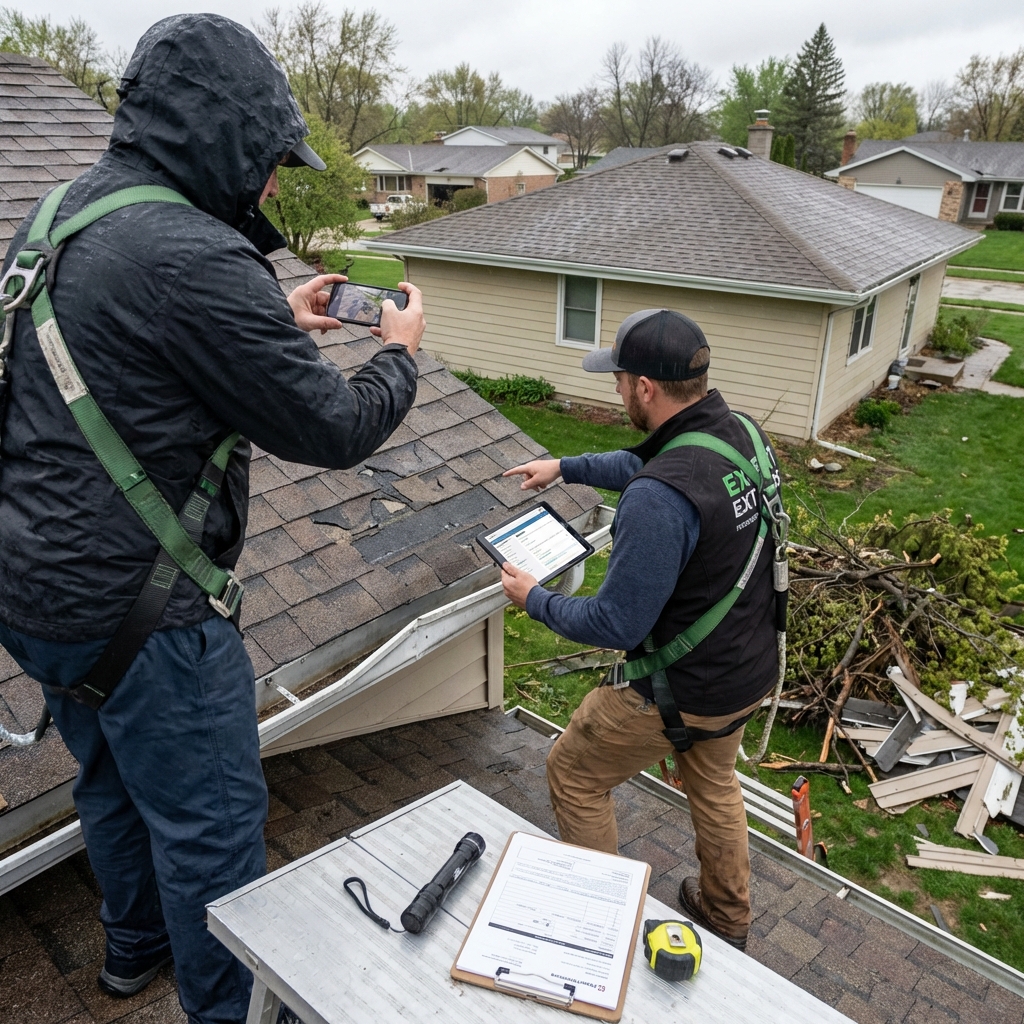
We help by providing what insurance companies want: professional documentation. Our inspectors know what adjusters look for. We photograph damage at angles that show severity, document the exact location on your roof, and prepare reports that speak the language insurers understand. When an adjuster sees a report from a licensed roofing contractor, they take the claim seriously.
Action to take now: Don’t wait to report damage. File a claim within 24-48 hours of discovering storm damage, even if you haven’t had an inspection yet. Early filing establishes the date of loss and strengthens your timeline.
The Critical First Steps to Documenting Your Storm Damage
The moment you notice roof damage, begin documenting. Your phone’s camera is sufficient. Take photos and video from multiple angles: ground level looking up, close-ups of damaged areas, wide shots showing the damage in context, and photos of surrounding undamaged areas for comparison.
Capture identifying details. If shingles are missing, photograph the exposed plywood underneath and note how many shingles are gone. If there’s hail damage, show the dents alongside an object for scale (a coin works well). If a tree branch damaged your roof, photograph the branch in place and the impact zone.
Document the weather event too. Screenshot the weather service report showing the storm’s timing, wind speeds, and hail size. Screenshot news articles about the storm. These establish that yes, a significant weather event occurred in your area on a specific date.
Write a brief narrative. Note the date and time you discovered damage, what you observed, and any damage to other property (siding, gutters, landscaping). This written record, combined with photos, creates credibility. Adjusters notice when homeowners are organized and thorough.
Avoid walking on your roof to inspect it yourself. You might miss damage, misidentify what you see, or cause additional damage. This is where professionals add value. We safely access your entire roof, spot damage homeowners miss, and photograph it properly.
Action to take now: Right after a storm, if you can safely view your roof from ground level or a window, take photos. Don’t enter the attic or climb onto the roof yourself. Instead, call us for a professional inspection. We’ll document everything properly and discuss next steps.
How Professional Roof Inspection Reports Strengthen Your Claim
An insurance adjuster may visit your home, but they’re not working for you. They’re working for the insurance company. What you need is documentation prepared by someone on your side, licensed and qualified to assess roof damage.
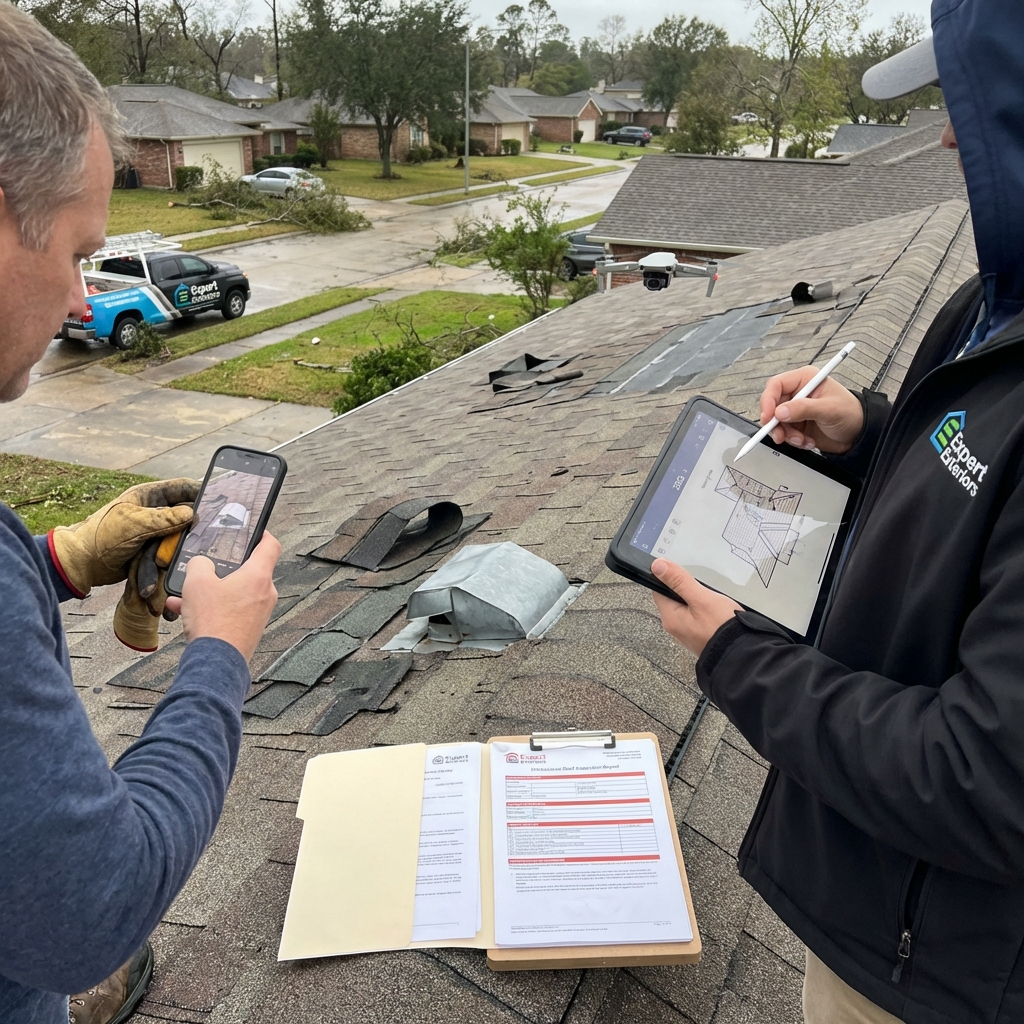
When we inspect your roof after storm damage, we document the entire picture. We note the type and age of your roofing materials, the extent of damage, and whether it’s storm-related. We photograph systematically, capturing damage from multiple angles. We measure affected areas, count damaged shingles, and note any structural concerns.
Our inspection report becomes your primary evidence. It includes photos, measurements, observations about the storm damage pattern, and our professional assessment of whether the damage matches what a hail or wind event causes. Insurance companies trust licensed contractors because we understand roofing and because our reputation depends on accuracy.
Reports from established contractors also protect you against adjuster disagreement. If an adjuster claims damage is “only cosmetic,” but our report documents underlying structural harm, you have professional validation. If an adjuster suggests some damage is pre-existing, our photos from the inspection date establish otherwise.
We’ve also completed dozens of these claims. We know how adjusters interpret different types of damage. We know which photos and measurements matter most. This experience translates into reports that are comprehensive and focused on what actually influences insurance decisions.
Action to take now: Contact us within 24 hours of discovering damage. Request an inspection and claim documentation package. The sooner we examine your roof, the clearer the evidence of storm damage timing and cause.
Organizing Your Documentation for Maximum Claim Approval
Insurance adjusters review hundreds of claims annually. Those with organized, clear documentation get decisions faster. Here’s how to structure yours.
Create a claim file, either physical or digital. Include your policy documents, your coverage limits, and deductible. Add the weather service report showing the storm event. Include date-stamped photos and video from your own inspection. Add our professional inspection report and photos.
Organize photos chronologically and by location. If you have photos from immediately after the storm and then photos from our inspection, label them with dates. This timeline shows the damage didn’t worsen due to your neglect between discovery and professional evaluation.
Create a spreadsheet listing all damage. If multiple areas are affected (roof, gutters, siding, landscaping), list each and reference the photos that document it. Some adjusters will approve roof repair but deny gutter damage if they’re not clearly documented separately.
Write a cover letter for your claim submission. Summarize what happened: the date of the storm, what damage you discovered, and that you’re submitting a professional inspection report. Keep it one page, factual, and non-emotional. Include the date you’re submitting the claim.
Include all receipts for emergency repairs (tarping, temporary fixes). Insurance covers reasonable emergency action to prevent further damage. If you spent money stopping water intrusion, that’s claimable and shows you acted responsibly.
Action to take now: As you gather documentation, create folders for each category (photos, inspection reports, weather data, receipts). When you file, include everything in order with a clear cover letter. This organization signals that you’re a credible claimant and speeds up approval.
The Timeline: When to File and How Quickly We Can Help
Timing affects claim outcomes. File too quickly and you haven’t fully assessed damage. Wait too long and adjusters question whether additional damage occurred after the storm or if you’ve been negligent with maintenance.

The optimal window is 48-72 hours after discovering damage. This gives you time to schedule a professional inspection without losing the immediate post-storm evidence. Most adjusters understand that homeowners need a day or two to arrange contractors.
Insurance policies require that you file within a specific timeframe, typically 60-90 days of discovering damage. Don’t use the entire window. File early, while memory is fresh and evidence is clear.
Our inspection usually happens within 2-3 business days of your call. We schedule according to your availability and the season (spring storms create higher demand). Once we inspect, we deliver our report within one week. This means you can file your claim with complete professional documentation within 7-10 days of the storm.
The adjuster then has 10-15 business days to investigate. If they visit your home and see our report, they typically move faster. Some approve within a week. Others request additional information or a second inspection. Plan for 2-4 weeks from filing to initial approval, longer if disputes arise.
Action to take now: Mark your calendar: if a storm strikes, call within 24 hours. Schedule an inspection for the next 2-3 business days. Plan to file your claim with our report included before 10 days have passed since the storm. This timeline maximizes approval odds.
Working with Your Adjuster: Our Expert Guidance
The insurance adjuster is not your advocate, but they’re also not your enemy. They’re doing their job, which is assessing whether your claim is legitimate and determining what the insurer owes. Working effectively with your adjuster is key.
When an adjuster schedules an inspection, attend it. Be present, cooperative, and knowledgeable. Show them your photos, our inspection report, and point out damage specifically. Don’t argue or pressure them. Answer questions directly. If they ask something you don’t know, say so and offer to get the answer.
Bring our inspection report to the adjuster’s appointment if possible. Walk through our findings together. When an adjuster sees that a licensed contractor has documented everything, they take the claim more seriously. They may still disagree with some of our assessment, but a professional report gives you credibility and provides data for discussion.
If the adjuster’s initial determination seems low, don’t accept it immediately. Ask for a detailed explanation of what they’re denying or undervaluing. Request they explain the difference between their assessment and ours if there’s a gap. Many adjusters will reconsider if presented with professional analysis.
Some insurers allow you to hire an independent appraiser if you disagree with the adjuster’s assessment. This costs money upfront (typically $500-$1,500) but can result in higher approvals if the appraiser sides with you. This is a step we recommend only if the dispute is significant.
Action to take now: When the adjuster schedules an appointment, confirm you’ll be home. Have our inspection report ready. Be honest, cooperative, and fact-focused. If their initial decision seems incorrect, ask for details before accepting it.
Common Mistakes That Delay or Deny Your Claim
We’ve seen good claims rejected due to preventable errors. Knowing these helps you avoid them.
Don’t exaggerate damage in your description. If you claim “massive structural damage” but photos show a few missing shingles, you lose credibility. Stick to facts and let the evidence speak.
Don’t file a claim without professional documentation. Homeowner photos are helpful but insufficient. Adjusters trust contractors because we have credentials at stake. Claims supported by professional reports are approved 3-4 times faster than those without.
Don’t wait to report damage. We understand that life is busy and a damaged roof isn’t an immediate emergency if you’ve tarped it. But delays make insurers skeptical. They’ll wonder if additional weather damaged it further or if you’re being negligent. File quickly, before doubts creep in.
Don’t make unauthorized repairs before the adjuster visits. Some policies void coverage if you repair before approval. Many specifically require insurer approval before repairs begin. If you’ve already replaced shingles or repaired damage, you’ve eliminated the evidence the adjuster needs to assess what really happened.
Don’t communicate only through email or letters. Adjusters may not respond quickly or thoroughly in writing. A phone call followed by an email summary creates accountability and speeds decisions.
Don’t accept a lowball offer without question. Adjusters sometimes underestimate repair costs or depreciation (deducting age from the payout). We can provide repair estimates that counter low offers and give you data for appeal.
Action to take now: Before filing, read your policy’s requirements about contractor approval and timing. Avoid any repairs until you’ve discussed your claim with your adjuster. Keep communication records and follow up on any unanswered questions.
How Expert Exteriors Handles the Complete Repair Process
Once your claim is approved, the repair phase begins. We handle this end-to-end so you don’t have to navigate it alone.
First, we provide a detailed repair estimate based on the approved claim amount and your roof’s specific needs. We discuss options: matching existing materials or upgrading to better durability. We explain the pros and cons of each choice.
We then coordinate with your insurance company. If the approved amount covers full replacement, we schedule the work. If there’s a gap between approval and actual costs, we discuss options. Some homeowners supplement out-of-pocket. Others choose partial repairs if budget is tight.
Our roof replacement services include full material and labor warranties. We work with quality suppliers and our crews are experienced in post-storm repairs. We know how to work efficiently without cutting corners, so your roof is properly repaired and protected for years to come.
We handle all insurance communication during repairs. If the adjuster has questions about progress or materials, they contact us. We provide updates and photos as work proceeds. This keeps you informed without adding administrative burden.
After completion, we schedule a final inspection with you. We walk through the roof, explain what was repaired, and discuss maintenance going forward. You receive all documentation: material warranties, workmanship warranties, and our 15-year workmanship guarantee on the repair.
Action to take now: Once your claim is approved, get an instant roof replacement quote from us. We’ll assess what materials are recommended and what the repair timeline looks like. This helps you move forward quickly and confidently.
Why Choosing Professional Installation Protects Your Future Claims
The work we do today protects your claims tomorrow. Quality installation matters more than people realize.
When we repair storm damage, we don’t just replace damaged sections. We assess the entire roof for wear, weakness, or additional damage the initial storm may have caused. We address everything so you don’t get claims denied later because of pre-existing problems we ignored.
Our installation standards exceed minimum code. We use quality materials, proper fastening, and techniques that last. A roof installed correctly can be re-claimed for future storm damage without question. A roof with shoddy installation or mismatched materials becomes suspect to adjusters on the next claim. They’ll dig deeper, question workmanship, and deny based on maintenance failures.
We also provide documentation of our work. Every roof we install comes with a detailed report: materials used, areas covered, workmanship standards applied, and warranties offered. This documentation becomes your proof of quality if future claims arise.
Insurance companies have relationships with preferred contractors. Adjusters know our reputation, our standards, and our history. When we repair a roof, the next adjuster will trust that it was done right. This smooths future claims.
Additionally, our 15-year workmanship warranties on full roof replacements give you protection beyond insurance. If anything goes wrong with our work, you’re covered. This matters if you ever sell the property, as buyers appreciate contractor-backed warranties.
Action to take now: Choose contractors based on their reputation and guarantees, not just price. When we repair your roof, you’re investing in a claims history that protects you. Ask us about warranties, references, and our experience with insurance repairs. We’re happy to discuss why professional installation pays dividends.
—
Filing a roof insurance claim for storm damage doesn’t have to be stressful if you follow a clear process. Document early, involve professionals quickly, organize thoroughly, and communicate clearly with your adjuster. We’re here to handle the inspection and repair, so you can focus on getting your property back to normal.
If a storm has damaged your roof in Brookfield or the surrounding areas, reach out to us. We’ll assess the damage, prepare professional documentation, and guide you through the claim process. Contact Expert Exteriors today to get started.