
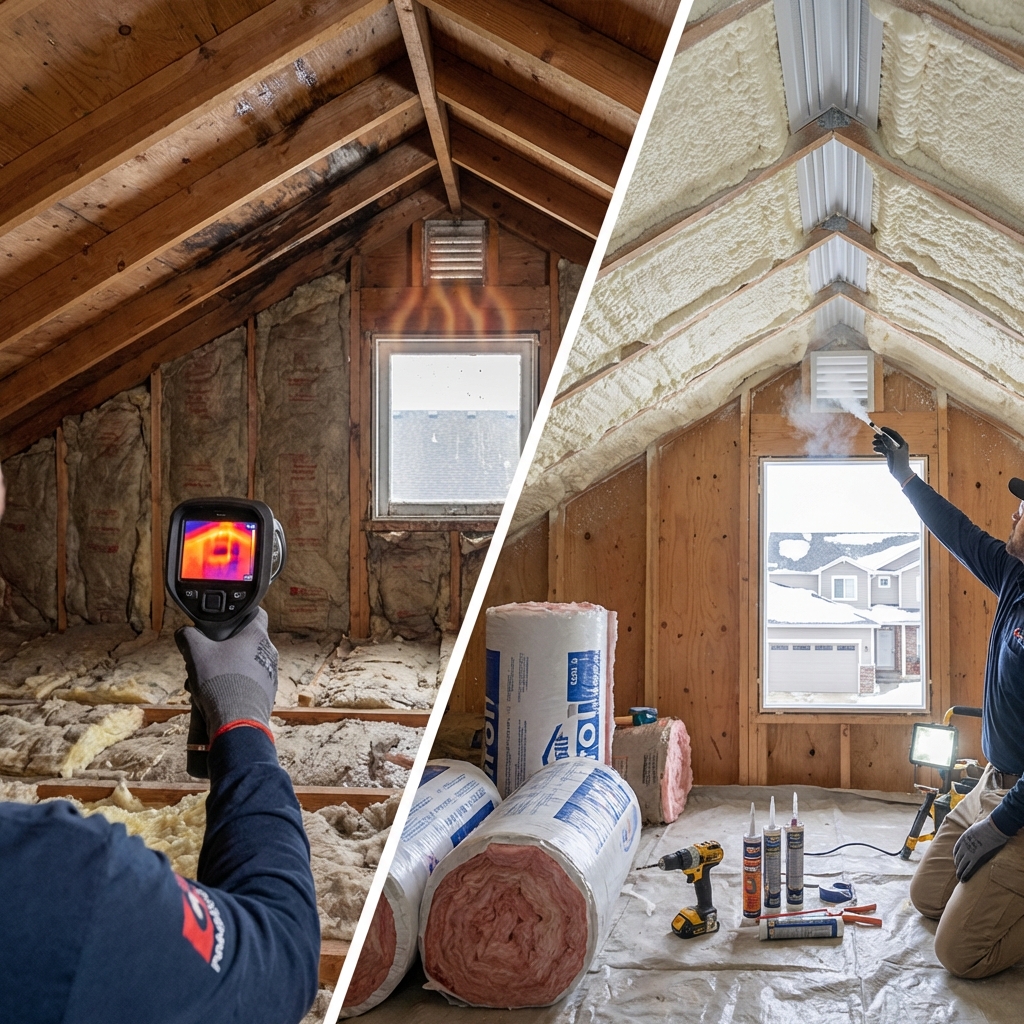
Maximizing Roof Life: How We Solve Ventilation and Insulation Problems
Why Your Roof’s Ventilation and Insulation Matter More Than You Think
Your roof does more than shield you from rain. It works alongside your attic’s ventilation and insulation systems to regulate temperature, manage moisture, and extend the lifespan of every shingle and beam underneath. When these systems fail, the damage compounds quickly—and the bill grows even faster.
We’ve spent years observing what separates roofs that last 20+ years from those needing replacement at 10-12 years. The difference rarely comes down to the shingles alone. Instead, it comes down to what’s happening in the hidden spaces above your ceiling.
Poor ventilation traps heat and moisture in your attic during summer and winter. This moisture promotes mold, rots wood framing, and degrades your insulation’s effectiveness. Poor insulation forces your HVAC system to work harder, raising utility costs while creating temperature swings that stress your roof materials. These two systems must work in tandem.
Think of it this way: a roof without proper ventilation and insulation is like a car with a faulty radiator. The engine might be fine, but it overheats regardless. We address the root cause, not just the symptom, so your investment actually lasts.
Common Ventilation Problems We See in Brookfield Homes
After assessing hundreds of roofs in Brookfield and the surrounding areas, we’ve identified patterns that repeat across older homes and even some newer builds that weren’t ventilated correctly from the start.
Blocked or Insufficient Intake Vents
We often find soffit vents clogged with insulation, debris, or even paint. Without proper intake airflow from the soffit, warm moist air can’t exit through ridge vents. Your attic becomes a pressure chamber where humidity accumulates.
Inadequate Ridge Ventilation
Some homes have ridge vents that are too small or installed improperly, limiting exhaust airflow. Others don’t have ridge vents at all, relying only on gable vents that don’t provide continuous air exchange.
Improper Vent Spacing
Code requires one square foot of ventilation for every 150 square feet of attic space (1:150 ratio). Many older homes fall short. We measure your attic and identify the shortfall.
Ice Damming Due to Inadequate Attic Ventilation and Insulation
This is a signature problem in Wisconsin winters. Poor ventilation combined with inadequate insulation causes the bottom layer of snow on your roof to melt, then refreeze at the soffit. Water backs up under shingles and leaks into walls and ceilings.
Blocked Soffit and Ridge Vents by Roofing Material
During roof replacement, we’ve seen contractors install shingles and underlayment that block soffit vents entirely. This creates a sealed attic that deteriorates rapidly.
The fix isn’t always obvious from the ground. Many homeowners don’t realize their ventilation is compromised until they see water stains, mold, or rotting wood.
How Poor Insulation Shortens Your Roof’s Lifespan
Insulation does two critical jobs: it prevents heat loss in winter and heat gain in summer. When it’s missing, degraded, or improperly installed, your roof pays the price.
Heat Buildup in Summer
Inadequate insulation allows summer heat to accumulate in the attic. Temperatures can exceed 140 degrees Fahrenheit. Shingles are engineered to withstand high heat, but sustained exposure at those levels accelerates granule loss and shortens their rated lifespan by years.
Condensation and Moisture Damage in Winter
When warm interior air leaks into a poorly insulated attic and meets cold roof surfaces, it condenses into liquid water. This moisture settles on wood framing, which absorbs it like a sponge. Within months, you’ll see mold, and within years, structural rot becomes expensive to repair.
Inadequate R-Value Coverage
We regularly encounter attics with R-19 insulation when current Wisconsin standards recommend R-49 or higher. Lower R-values mean your heating and cooling system works twice as hard, your utility bills spike, and your roof endures greater temperature stress.
Settling and Compression
Older fiberglass batts compress over time, especially near attic access points where foot traffic occurs. Compressed insulation loses R-value effectively and exposes new gaps where warm air escapes.
The relationship is direct: better insulation stabilizes attic temperature, reduces moisture formation, and dramatically extends shingle life. We’ve seen insulation upgrades alone add 5-10 years to a roof’s expected lifespan.
Our Comprehensive Roof Assessment Process
Before we recommend anything, we conduct a thorough inspection that examines both visible and hidden elements of your roof system.
What We Evaluate
Our assessment covers attic ventilation (intake and exhaust), current insulation depth and condition, roof sheathing integrity, signs of moisture damage or mold, soffit and ridge vent design, and gutter condition. We also check for ice damming evidence in winter and heat damage signs in summer.
Moisture Mapping
We use moisture detection tools to identify areas where condensation has accumulated or wood has absorbed water. This reveals problem zones you can’t see from below.
Photographic Documentation
We photograph key areas, insulation levels, and ventilation deficiencies so you understand exactly what we found. Many homeowners find it eye-opening to see photos of blocked soffit vents or severely compressed insulation.
Custom Recommendations
Based on findings, we develop a prioritized improvement plan. We might recommend ventilation upgrades first if moisture is the primary issue, or insulation work if heat buildup is the concern. Sometimes both are equally urgent.
The assessment typically takes 1-2 hours and includes a detailed written report. We don’t use this as a sales tactic; we use it to ensure you understand your roof’s condition and make informed decisions about protection and longevity.
Our Ventilation Solutions for Residential Properties
Once we’ve identified ventilation gaps, we implement solutions tailored to your home’s design and attic configuration.
Soffit and Ridge Vent Optimization
We calculate the exact ventilation ratio your attic needs and install or upgrade soffit vents for intake and ridge vents for exhaust. These work together to create a continuous air cycle that prevents moisture buildup. We ensure soffit vents are never blocked by insulation by installing proper baffles.
Gable Vent Upgrades
While ridge and soffit vents are the gold standard, properly installed gable vents can supplement ventilation on certain roof designs. We size and position them correctly to enhance airflow without creating short-circuits where intake air escapes immediately without circulating.
Power Ventilation When Needed
Some attic configurations or additions prevent passive ventilation from meeting demand. In these cases, we install powered attic fans with thermostatic controls. The fan activates when attic temperature rises above a threshold, pulling air through soffit vents and exhausting it at the ridge.
Roof Decking and Sheathing Assessment
If ventilation problems have existed for years, wood sheathing may need repair or replacement. We inspect this as part of any ventilation upgrade and address damage before it spreads.
The key principle we follow: ventilation must flow unobstructed from soffit intake to ridge exhaust. Any disruption in this path creates dead zones where moisture accumulates.
Our Insulation Upgrade Options

We work with homeowners to select insulation solutions that match their budget and performance goals.
Blown-In Fiberglass and Cellulose
These are cost-effective options for achieving higher R-values in existing attics. Blown-in material fills gaps and settles into irregular spaces better than batts. We typically recommend adding insulation rather than removing old material, unless the old insulation is heavily contaminated.
Closed-Cell Spray Foam
For maximum R-value per inch and superior moisture resistance, spray foam insulation is excellent. It creates an air seal that reduces air leakage between the living space and attic, and it resists moisture absorption. The upfront cost is higher, but energy savings and durability justify it for many homeowners.
Batt Replacement with Proper Installation
If existing batts are compressed, settling, or inadequately covering the attic floor, we remove and replace them with new batts of higher R-value. We ensure proper coverage with no gaps, and we install baffles to maintain soffit vent airflow.
Combination Approaches
Sometimes the most effective solution combines methods. For example, we might install spray foam on exposed roof decking in an addition while blown-in cellulose fills the remainder of the attic.
All insulation work includes proper air sealing around ducts, wiring, and penetrations. Air leakage defeats insulation efficiency faster than anything else.
Commercial Roofing Ventilation Standards We Follow
Commercial roofing ventilation follows different standards than residential, particularly for flat and low-slope systems. We maintain strict adherence to these standards on our commercial roofing projects.
EPDM and TPO System Ventilation
Flat-roof systems like EPDM and TPO require ventilation design that prevents moisture in the roof cavity from rising into the insulation. We use vented decking systems, carefully placed vents, or fully adhered systems depending on your building’s configuration.
Parapet and Perimeter Considerations
Commercial buildings with parapets often have complex ventilation geometry. We design vent placement to ensure even air circulation and prevent dead zones where moisture could collect.
Building Code Compliance
We follow Wisconsin commercial building code for ventilation ratios and placement. Compliance protects your commercial property warranty and ensures your roof system performs as designed.
Regular Inspections and Maintenance
For our commercial clients, we establish maintenance schedules that include checking vents for blockage and ensuring ventilation paths remain clear. Preventive maintenance catches problems before they become costly.
How Our Approach Protects Your Investment
When we address ventilation and insulation comprehensively, we’re not just solving today’s problem; we’re adding years to your roof’s life and reducing your future replacement costs.
Extended Roof Life
A properly ventilated and insulated attic reduces shingle degradation dramatically. Shingles experience less thermal stress, moisture damage decreases, and the structural integrity of your roof deck stays intact. We’ve documented many roofs that were renewed by insulation and ventilation improvements, extending their life well beyond their original timeline.
Energy Cost Reduction
Better insulation and ventilation balance your attic temperature, which means your HVAC system doesn’t work as hard. Many homeowners report 10-20% reductions in heating and cooling costs after we complete these upgrades.

Moisture and Mold Prevention
Controlled attic moisture eliminates the conditions mold needs to grow. Your living space stays healthier, and you avoid the expensive remediation that mold infestations require.
Prevention of Ice Damming
Proper insulation and ventilation work together to prevent ice damming in Wisconsin winters. By keeping the roof surface cold and preventing melt-and-refreeze cycles, we eliminate one of the costliest winter roof problems.
Protection Against Structural Rot
Wet wood deteriorates. Dry wood lasts generations. Our ventilation and insulation solutions keep your attic framing dry, protecting the structural integrity of your entire home.
Real Results from Our Brookfield Customers
We’ve worked with numerous Brookfield homeowners and businesses to solve ventilation and insulation problems. Here’s what we’ve observed.
Case: 1970s Ranch Home with Ice Dams
A Brookfield family struggled with severe ice damming every winter, leading to water damage in the second-floor bedrooms. We found the attic had R-11 insulation and minimal soffit ventilation. After installing R-49 blown-in cellulose and upgrading soffit and ridge vents, they experienced no ice damming the following winter. Two years later, they reported 18% lower heating bills.
Case: Commercial Building with Roof Sweating
A local commercial building’s flat roof experienced condensation that dripped into the space below, damaging ceiling tiles and insulation. The ventilation path was blocked by improper construction. We redesigned the ventilation system, and the sweating stopped within weeks. The building owner avoided a full roof replacement by addressing ventilation first.
Case: Home with Attic Mold
One homeowner discovered mold in the attic after noticing musty odors. The home had poor soffit ventilation, and insulation was compressed in several areas. We cleaned the attic, upgraded ventilation, replaced insulation, and air-sealed gaps. The mold hasn’t returned, and the homeowner confirmed peace of mind knowing the problem was solved at the root.
These aren’t isolated wins. Across our local service area, ventilation and insulation upgrades consistently deliver results that exceed expectations.
Getting Started with Your Roof Improvement Plan
If you’re concerned about your roof’s ventilation and insulation, the first step is straightforward.
Schedule Your Inspection
Contact us to book a comprehensive roof assessment. We’ll evaluate your attic, identify problems, and provide a detailed report with recommendations. There’s no obligation, and the assessment itself provides clarity you can’t get any other way.
Review Your Options
Once we’ve completed the inspection, we’ll walk through improvement options with you. We explain the costs, expected benefits, and timeline for each approach so you can make decisions based on your priorities and budget.
Plan Your Work
Ventilation and insulation improvements often make sense to coordinate with roof replacement services or other exterior work. We’ll help you sequence projects efficiently and discuss warranty implications.
Protect Your Investment Long-Term
After improvements are complete, we recommend a maintenance schedule that keeps ventilation clear and ensures your upgrades continue performing. This might include periodic attic inspections or seasonal checks.
Your roof is one of your home’s or building’s most valuable investments. Ventilation and insulation aren’t glamorous, but they’re foundational to protecting that investment. We’re here to help you get them right. Reach out today, and let’s make sure your roof is set up for a long, healthy life.