

7 Critical Pitfalls to Avoid When Hiring an Exterior Remodeling Company
Why Hiring the Right Exterior Remodeling Company Matters for Your Property
Your roof, siding, and exterior components protect everything you’ve invested in. One bad contractor decision can lead to premature failure, costly repairs, water damage, or worse. We’ve spent years in this industry watching property owners face avoidable consequences because they hired the wrong company.
The exterior of your home or building is its first line of defense against Wisconsin’s harsh weather. A poorly executed roof replacement or siding project doesn’t just waste money; it can compromise your property’s structural integrity and resale value. That’s why selecting a qualified, trustworthy contractor isn’t just a smart choice—it’s essential.
We want you to understand the red flags and know exactly what separates legitimate contractors from those cutting corners. This guide walks you through the seven most common mistakes we see property owners make, so you can avoid them and protect your investment.
Pitfall 1: Choosing Contractors Without Proper Licensing and Insurance
This is where most problems begin. An unlicensed or underinsured contractor might offer competitive pricing, but that discount evaporates fast when something goes wrong.
Here’s what you need to verify:
- Wisconsin Department of Safety and Professional Services (DSPS) license: Search for the contractor’s active license online. If they don’t have one, walk away immediately.
- General liability insurance: Request proof of coverage. Minimum coverage should be $1 million. Ask them to provide a certificate of insurance naming you as an additional insured.
- Workers’ compensation insurance: Verify this is current. If they’re using subcontractors, ensure those subcontractors carry their own coverage.
- Bonding: Many reputable contractors carry performance bonds, which protect you if the job isn’t completed.
When a contractor lacks proper licensing or insurance, you become personally liable if someone is injured on your property or if work is performed negligently. We maintain current licensing and comprehensive insurance across all our projects because we take that responsibility seriously.
Your actionable step: Before requesting a quote, call your state licensing board or search online. Spend five minutes verifying credentials. It’s the fastest way to eliminate unqualified operators.
Pitfall 2: Ignoring References and Local Track Records
Word-of-mouth recommendations matter, but they’re only part of the picture. Many contractors hand out references from friends or family—people who may not have deep construction experience and might overlook quality issues.
Instead, dig deeper:
- Ask for at least five references from work completed in the last two years. Prioritize recent jobs, not work from a decade ago.
- Call those references and ask specific questions: “Were they on schedule? Did they communicate regularly? Did they clean up properly? Would you hire them again?”
- Check online reviews on Google, Better Business Bureau (BBB), and Angie’s List. Look for patterns, not single complaints.
- Visit past job sites if possible. Observe the quality of work, the condition of roofs, or the fit of siding installations.
- Ask the contractor for their longest-standing client relationship. Loyalty speaks volumes.
We’re proud of our past projects across residential and commercial properties in Brookfield and surrounding areas. Property owners who’ve worked with us can speak to our attention to detail and follow-through.
A contractor who hesitates to provide references or gets defensive when you call them is showing you who they are. Believe them.
Your actionable step: Contact at least three references this week. Ask about their experience from start to finish, not just whether the work looked good.
Pitfall 3: Falling for Suspiciously Low Bids and Hidden Costs
The lowest bid feels like the best deal until you realize it comes with shortcuts. We’ve seen contractors underquote projects knowing they’ll add fees later or use inferior materials to recover costs.
Common bait-and-switch tactics include:
- Extremely low initial estimates followed by “surprise” charges for site prep, old material disposal, or unexpected damage discovered once work begins.
- Quotes that don’t specify materials (shingles, siding type, fascia, soffit) or labor scope. Vague pricing is a major warning sign.
- Contractors who pressure you to sign quickly without time to compare bids or review fine print.
- No breakdown of labor, materials, and overhead. A professional quote itemizes everything.
When you receive quotes, they should be detailed. You should see the same proposal structure from multiple contractors so you can compare apples to apples. If one bid is 30-40% lower than others, ask why. The answer will tell you everything.
We price competitively based on quality materials, skilled labor, and timely completion. Our estimates include every element, so there are no surprises once work starts.
Your actionable step: Get at least three written quotes and request a line-item breakdown for each. If one quote lacks detail or is a dramatic outlier, request clarification or skip it.
Pitfall 4: Not Verifying Manufacturer Certifications and Warranties
The roofing and siding materials you install carry manufacturer warranties, but only if they’re installed correctly by certified contractors. An uncertified installer voids that protection, leaving you with no recourse if shingles fail prematurely or siding cracks.
What to verify:
- Ask if the contractor is a certified installer for the specific brands you’re using (like LP SmartSide for siding or EPDM and TPO for commercial roofing). Manufacturers maintain lists of certified installers online.
- Request documentation of the warranty being provided. There’s usually a manufacturer’s warranty (material coverage) and a contractor’s workmanship warranty. Both matter.
- Understand the warranty term. We provide 15-year workmanship warranties on full roof and siding replacements, which gives you long-term confidence in the work.
- Ask who honors the warranty if the contractor goes out of business. A reputable company should back its work regardless.
A contractor who can’t or won’t provide warranty documentation is signaling that they’re not confident in their installation quality. That’s a dealbreaker.
Your actionable step: Contact the manufacturer directly and confirm the contractor appears on their certified installer list. This takes 10 minutes and protects decades of coverage.
Pitfall 5: Overlooking Communication and Project Timeline Clarity
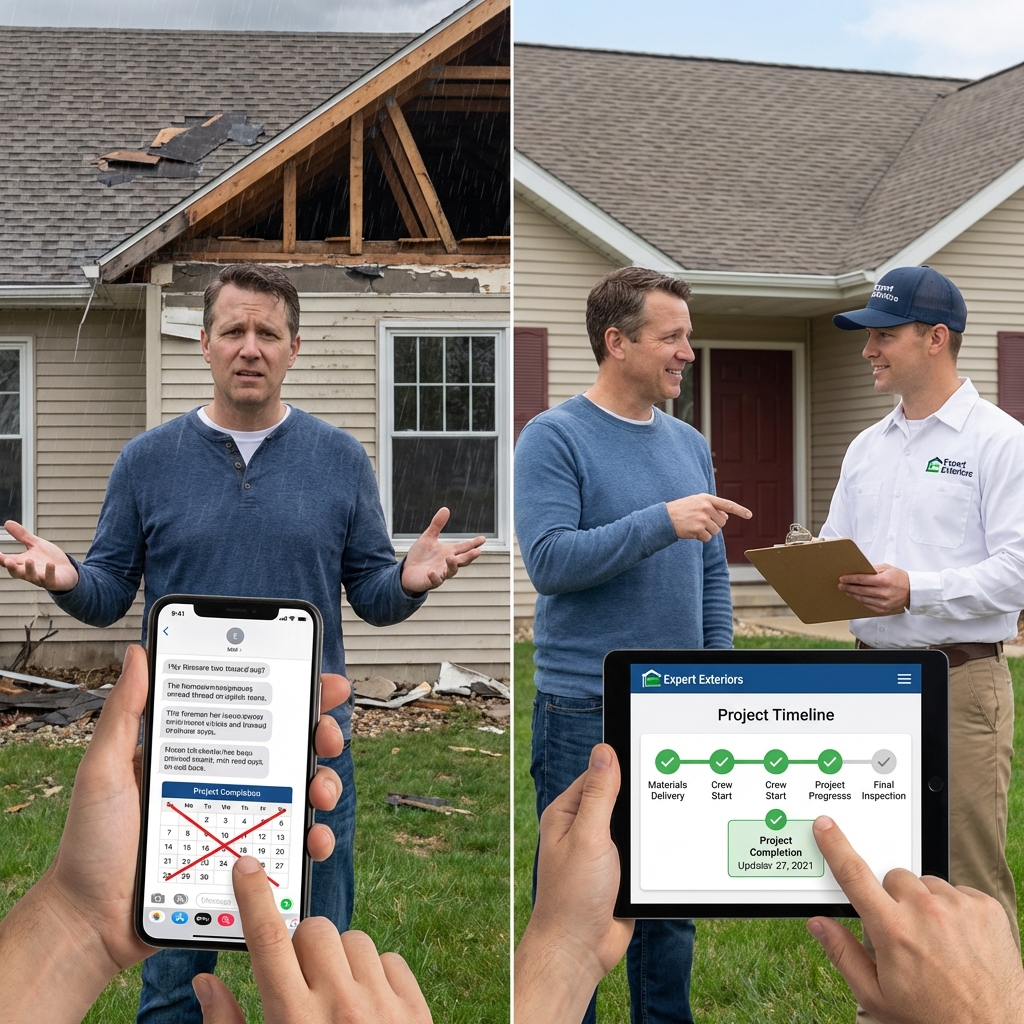
Poor communication during a project creates chaos. You don’t know when crews are arriving, what stage they’re at, or when completion date might shift. Meanwhile, the contractor is avoiding your calls.
Establish communication expectations upfront:
- Ask how often you’ll receive progress updates. Daily, weekly, or as-needed should be defined before work begins.
- Get a written timeline with milestone dates: start date, rough-in completion, material delivery windows, and final completion.
- Ask who your main point of contact is. You shouldn’t have to hunt for answers through different crew members.
- Discuss how changes or issues will be communicated and approved. How much notice do you get if something is discovered that affects scope or timeline?
- Confirm how the contractor handles weather delays, permit delays, or unforeseen conditions.
We assign a dedicated project manager to every job who communicates regularly and keeps you informed about progress, timeline adjustments, and any issues that arise.
Projects that lack clear communication timelines almost always exceed expectations (in both time and cost). Those that start with defined milestones run smoothly.
Your actionable step: Before signing anything, confirm in writing how often you’ll hear updates and who you’ll contact with questions. If the contractor brushes this off, that’s your signal to look elsewhere.
Pitfall 6: Failing to Get Detailed Written Contracts and Scope Documents
A handshake agreement or a verbal promise is worth nothing when disputes arise. You need a written contract that spells out exactly what’s being done, what’s not included, payment terms, and dispute resolution.
Your contract must include:
- Complete scope of work with specific materials, colors, and quantities.
- Start and completion dates with clear language about how delays are handled.
- Payment schedule. Legitimate contractors don’t ask for full payment upfront. A typical structure is 25-33% deposit, 50% at project midpoint, remainder at completion.
- Change order process. How will additions or modifications to scope be documented and priced?
- Cleanup and debris removal specifics. What’s included? What costs extra?
- Warranty details (both manufacturer and workmanship) with clear terms.
- Insurance and licensing information, with proof attached.
- Lien waivers. After final payment, you should receive a document stating the contractor and all subcontractors have been paid in full.
Never sign a contract you don’t fully understand. Have it reviewed by someone with construction knowledge if needed. A contractor who refuses to put everything in writing, or who makes you sign a form contract without allowing questions, is not someone you want managing a major project.
Your actionable step: Request the contractor’s standard contract before you’re ready to book work. Review it carefully. This gives you time to ask clarifying questions without pressure.
Pitfall 7: Choosing Companies Without Local Expertise in Your Area
A contractor from out of state or one who’s unfamiliar with your area’s climate and building codes creates unnecessary risk. Wisconsin winters, freeze-thaw cycles, and local permit requirements demand specific knowledge.
Local expertise matters because:
- We understand Wisconsin’s extreme weather patterns and design exterior systems to handle them. Materials and installation techniques need to account for freeze-thaw cycles and heavy snow loads.
- Local contractors know the permit requirements in Brookfield and surrounding municipalities. We handle this paperwork to keep projects on track and compliant.
- Our reputation is built on our service areas. If something goes wrong years later, you can find us and we’ll stand behind our work.
- We have established relationships with material suppliers and can source quality products reliably.
- We know which materials perform best in our climate. What works in Arizona doesn’t necessarily work in Wisconsin.
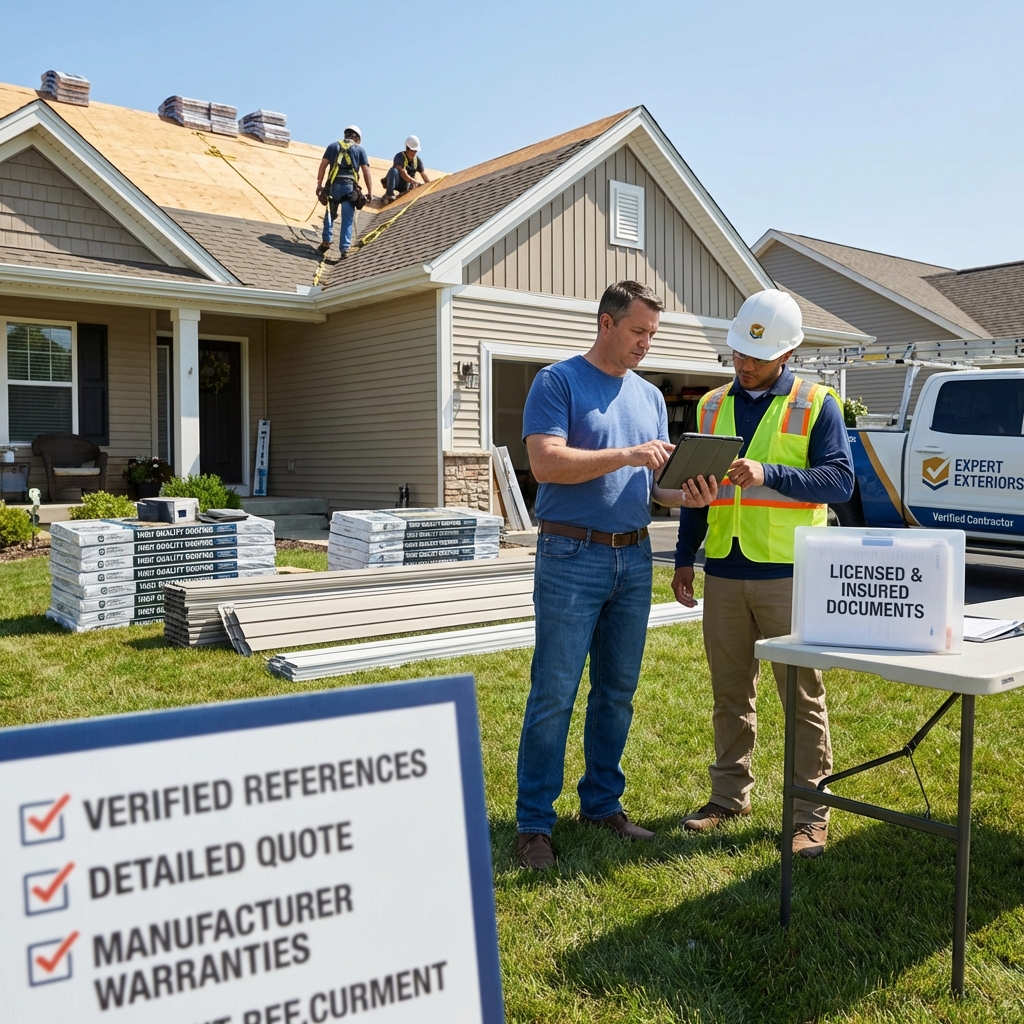
A contractor who’s passing through town, has no local presence, and can’t show recent work in your area should be a red flag. They won’t be around to service warranty claims or fix problems that emerge after they’ve moved on.
Your actionable step: Ask the contractor if they’ve completed projects in your specific neighborhood or municipality within the last year. Request photos or addresses you can drive by. Local work means accountability.
How We Protect Your Investment Through Transparent, Professional Standards
We operate with the standards outlined in this guide because we believe you deserve clarity and confidence when hiring an exterior contractor.
Here’s how we approach every project:
- Licensing and Insurance: We maintain full Wisconsin DSPS licensing, comprehensive general liability insurance, and workers’ compensation coverage. We provide proof of all credentials upfront.
- Local Track Record: We’ve built our reputation on residential and commercial projects throughout Brookfield and surrounding areas. Our references are real, recent, and available.
- Transparent Pricing: Our estimates are detailed and itemized. We discuss materials, labor, timeline, and costs clearly. No surprises mid-project.
- Certified Installations: We’re certified installers for major manufacturers, which means your warranty coverage is protected and valid.
- Communication: Every project has a dedicated point of contact who keeps you informed from start to finish.
- Professional Contracts: We provide written contracts with complete scope, timeline, payment terms, and warranty details. Everything is documented.
- Expert Expertise: We specialize in roof replacement and siding replacement with deep knowledge of local climate and building codes.
We stand behind every project with 15-year workmanship warranties, because we’re confident in our craftsmanship and our commitment to you extends long after completion.
Your Next Steps to Finding a Trustworthy Exterior Remodeling Partner
Now that you understand what to avoid, here’s how to move forward:
- Identify your project needs: Are you replacing your roof, siding, gutters, fascia, or soffit? Be specific about what needs attention.
- Verify credentials: Search your state licensing board and check references. Spend the time to verify every contractor you’re considering.
- Request detailed estimates: Get at least three quotes with itemized breakdowns. Compare materials, labor scope, timeline, and warranty terms side by side.
- Review contracts carefully: Before signing anything, read the entire contract and ask questions. Insist on written clarity about scope, payment schedule, timeline, and warranties.
- Confirm local expertise: Ask about recent work in your area. Visit past job sites if possible. A local contractor stands behind their reputation.
- Trust your instincts: If something feels off, it probably is. The cheapest option rarely delivers the best results.
If you’d like to explore how we can help protect your property with quality exterior remodeling, we’re happy to discuss your project. Learn more about Expert Exteriors and how we’ve served property owners across Brookfield and surrounding communities. We’re here to answer your questions and provide the professional guidance you deserve.