

Expert Exteriors vs Gutter Helmet: Complete Comparison Guide
Introduction: Understanding Your Gutter Protection Options
If you’re researching gutter protection for a Wisconsin property, you’ve likely come across brand-name systems like Gutter Helmet alongside local exterior renovation contractors such as Expert Exteriors. At first glance, that can feel like comparing a product to a service—but that’s exactly the point. A thorough gutter protection systems comparison should evaluate not only the device that keeps debris out of your gutters, but also the condition and design of the entire eaves system: gutters, fascia, soffits, roof edges, and even how your roof sheds water.
In Brookfield and surrounding communities, snow loads, freeze–thaw cycles, spring pollen, and fall leaves test every component along the roofline. Choosing the right path—installing a protective cap over existing gutters, replacing gutters entirely, or coordinating upgrades as part of a broader exterior project—comes down to balancing performance, durability, maintenance, cost, and how the solution integrates with your roof and siding.
This guide compares Gutter Helmet’s approach to the comprehensive services offered by Expert Exteriors. You’ll learn how each option functions, what installation and upkeep look like, realistic cost expectations, and how to align choices with your property’s age, roof design, and long-term goals. Whether you own a leafy residential lot or manage a commercial building with wide roof planes, the goal is a clear, practical framework for your decision.
What is Gutter Helmet and How It Works
Gutter Helmet is a branded, helmet-style cover designed to keep leaves and larger debris out of your gutters. It uses a solid, curved aluminum panel (often referred to as a nose-forward design) that relies on surface tension to draw rainwater into the gutter slot while encouraging debris to slide off the edge. The concept is simple: water follows the curve into the gutter; most leaves, twigs, and seed pods don’t.
Installation typically involves fastening the cover to the roof edge or fascia and integrating it with existing gutters after they’ve been cleaned and aligned. Dealers may use brackets to support the panel, and color-matched finishes help the system blend with the roofline. In many settings, this approach significantly reduces ladder time and the risk of clogs that can lead to overflows or fascia rot.
No gutter cover is a silver bullet. Very fine debris—pine needles, spring catkins, granules from shingles—can sometimes collect at the entry slot or on the cover, requiring periodic rinsing. On very steep roofs or in high-volume runoff areas like valleys, water can overshoot if the cover isn’t set at the right angle or if gutters are undersized. Winter performance can also vary: ice and snow may slide over the cover, but refreezing at the eaves is a separate roof insulation and ventilation issue. As with any system, results depend heavily on proper sizing, pitch, and the condition of the underlying gutters and fascia.
Expert Exteriors’ Comprehensive Exterior Services
Expert Exteriors is an exterior remodeling contractor serving Brookfield and surrounding areas, specializing in roof, siding, fascia, soffit, and gutter replacement. Rather than offering a single add-on product, the company approaches water management as an integrated system that must move runoff away from the structure without compromising ventilation, roof performance, or curb appeal.
Key service areas include:
- Gutter design and replacement along with fascia/soffit repairs or upgrades, addressed together to solve root-cause issues at the eaves. Learn more about coordinated planning on the company’s gutters, fascia and soffit page.
- Residential shingle roof replacement that ties in drip edge, ice-and-water shield, and clean transitions to new gutters. For details on approaches and materials, see roof replacement options.
- Commercial roofing solutions—EPDM and TPO membranes—for flat or low-slope buildings where drainage strategies differ from typical homes.
- Siding replacement, including durable vinyl and engineered wood cladding such as LP SmartSide siding, an upgrade that complements new gutters and refreshes elevation lines.
- A defined service area across the Milwaukee metro, keeping response times tight and material selections local.
The benefit of a contractor-led solution is coordination. If your gutters are undersized, your soffit vents are blocked, or your fascia is soft, a cover alone won’t fix the underlying problem. Expert Exteriors assesses roof pitch, roof age, eave ventilation, fascia integrity, and downspout placement, and then recommends a plan that might include new seamless 5-inch or 6-inch K-style gutters, additional downspouts, reinforced hangers, or strategic splash protection where snow slides.
Key Differences in Installation and Durability
Gutter Helmet is an accessory that adapts to existing gutters. Expert Exteriors, by contrast, rebuilds the eaves system when conditions call for it. That difference influences how installation proceeds, the materials used, and the system’s durability in Wisconsin weather.
Installation approach:
- Gutter Helmet: Installed over clean, aligned, and adequately pitched existing gutters, typically with brackets attaching to the fascia or roof edge. It’s a one-day add-on in many cases. Success hinges on the integrity and sizing of current gutters and the straightness and soundness of the fascia board.
- Expert Exteriors: Measures roof edges, calculates drainage loads, and fabricates seamless aluminum gutters on-site. The crew sets hidden hangers at appropriate spacing (often 24–32 inches on center, tighter near valleys), uses stainless or coated fasteners, corrects pitch to 1/16–1/8 inch per foot, and evaluates the fascia/soffit assembly for moisture damage or ventilation needs before hanging anything new.
Durability and material life:
- Cover-based solutions rely on the strength of the cover panel and bracket system, plus the condition of the underlying gutters. Durable aluminum covers resist rust; however, if the existing gutter is thin, dented, or poorly supported, the entire assembly can flex under snow load.
- A full replacement allows the contractor to specify heavier-gauge seamless gutters (e.g., .032 aluminum), robust hangers, and larger-capacity 6-inch profiles where roof valleys dump water. This creates a stiffer system designed to handle heavy rain and wet snow. Where snow slides aggressively, Expert Exteriors can coordinate roof snow guards to reduce impact on the gutter edge.
Integration with the roof and soffits:
- Some covers tuck under shingles or drip edge; modern approaches often fasten to fascia to avoid interfering with shingle warranties, but practices vary. If your roof is nearing the end of its life, timing a gutter project with a reroof ensures proper ice/water barriers, drip edge, and a clean transition to new gutters and downspouts.
- When soffit vents are painted shut or covered with insulation, ice dams become more likely. An exterior contractor addresses ventilation as part of the job, avoiding the trap of treating only the symptom.
If you’re weighing whether a cover-only solution will solve your problem, it helps to walk through broader design considerations. Expert Exteriors offers a concise gutters and fascia guide that outlines the key elements that make an eaves system reliable over time.
Cost Comparison: Initial Investment vs Long-Term Value
Pricing varies by market, material specifications, roof complexity, and access. Still, you can think in ranges and scenarios to frame total cost of ownership. The numbers below are broad, illustrative ballparks for the Midwest; always request a written, site-specific estimate before deciding.
Typical installed cost ranges:
- Helmet-style covers over existing gutters: roughly $18–$35 per linear foot installed, depending on profile, brackets, and site complexity.
- New seamless aluminum gutters (5-inch): roughly $8–$16 per linear foot installed; 6-inch profiles may run $10–$20 per linear foot.
- Micro-mesh covers used with new gutters: roughly $10–$20 per linear foot added to gutter pricing, depending on brand and stainless mesh quality.
- Spot repairs to fascia/soffits can add line items; extensive rot replacement or venting upgrades are typically quoted separately.
Scenario modeling (for a home with ~200 linear feet of gutters):
- Keep existing gutters + install helmet-style covers: $3,600–$7,000.
- Replace gutters only (5-inch, standard hangers): $1,600–$3,200.
- Replace gutters (6-inch where needed) + micro-mesh covers: $4,000–$8,000.
- Full eaves refresh (targeted fascia/soffit repairs, 6-inch gutters, added downspouts): varies widely, often $5,000–$10,000+ depending on carpentry.
Where long-term value emerges:
- If existing gutters are healthy and correctly pitched, adding a premium cover can be cost-effective and minimize cleaning frequency.
- If gutters are undersized, bent, or hung with spikes instead of hidden hangers, replacing them first can deliver better overflow control for less money than covers alone.
- In tree-dense settings, a durable cover reduces seasonal maintenance costs and ladder risk. In lower-debris settings, upsizing to 6-inch gutters and strategic downspouts may solve overflow without a cover.
- Bundling with larger projects—re-roofing or siding—can reduce mobilization costs and synchronize warranties. Coordinating timelines also reduces rework (e.g., reinstalling gutters after a new roof).
When comparing gutter installation costs, weigh labor quality, material thickness, hanger type, and downspout sizing. An attractive low number on paper won’t feel like savings if seams drip, hangers pull out of soft fascia, or downspouts can’t handle Wisconsin cloudbursts.
Maintenance Requirements and Warranty Coverage
A clear maintenance plan keeps any system working as designed. The difference lies in frequency and access.

Maintenance profiles:
- Helmet-style covers: Significantly reduce gutter cleaning but still benefit from occasional rinsing at the nose to remove fine debris. After high-pollen weeks or heavy seed drop, a hose-down from the ground may be enough if the cover design allows. Annual inspections for bracket tightness and to confirm the entry slot is clear are advisable.
- New gutters without covers: Expect seasonal cleanouts in tree-heavy neighborhoods. With gutter guards, plan light brushing or rinsing as needed, especially where pine needles or shingle granules collect.
- Full eaves upgrades: When fascia, soffits, and flashing are addressed together, you’re less likely to see chronic moisture issues that force frequent call-backs. Balanced ventilation also helps limit ice-dam formation, which often drives winter service calls.
Warranty considerations:
- Branded cover systems are often marketed with long performance warranties against gutter clogs under specified conditions. Actual terms—transferability, exclusions for pitch/valley overshoot, or fine debris—vary by dealer and jurisdiction. Always request the full written warranty and ask who services claims.
- New aluminum gutters typically carry manufacturer finish warranties (against chalking/fading) and a workmanship warranty from the installer. Expert Exteriors is transparent about workmanship coverage across projects; for example, you can review warranty topics on their siding replacement benefits page to get a sense of how they structure protection across trades.
- When bundling roof and gutter work, alignment of warranties matters. Proper drip edge, underlayment, and flashing integration during a re-roof can prevent leaks attributed incorrectly to gutters or covers. Coordinating the trades under one contractor can simplify service if an issue arises.
The takeaway: whichever path you choose, document maintenance expectations and warranty responsibilities in writing. It’s the surest way to protect your investment and avoid confusion during storm season.
Customer Reviews and Performance Track Record
Performance depends as much on installer capability as on product selection. This applies to both cover systems and full gutter replacements.
What to evaluate locally:
- Track record with homes like yours: roof pitch, number of valleys, tree density, and whether 6-inch gutters are routinely specified where appropriate.
- Evidence of problem-solving: photos or case studies showing corrected pitch, fascia repairs, added downspout capacity, and valley splash solutions.
- Service responsiveness: storm damage happens. Ask how quickly service tickets are addressed during peak seasons.
- References and third-party ratings: search across platforms (Google, BBB, trade associations) and request nearby addresses you can drive by.
For a commercial building owner, ask specifically about EPDM/TPO roof experience. While traditional gutter covers may be irrelevant on a low-slope membrane roof with internal drains, your contractor should understand scupper sizing, conductor heads, and debris screens that won’t trap ice.
Expert Exteriors focuses on exterior systems as a whole, from residential roofing to commercial membranes, siding, and eaves. That broader scope can be helpful when diagnosing leaks at the roofline or chronic overflow at particular elevations because the team can adjust more than one variable. As always, request recent, local references to confirm results align with your expectations.
Material Quality and Weather Resistance
Wisconsin weather is a stress test. Material choice—and how components are fastened—determines how your system fares through storms, snow slides, and freeze–thaw cycles.
Key specs to consider:
- Aluminum thickness: .027-inch is common, while .032-inch provides added stiffness for long runs and exposed edges subject to snow or ladder bumps.
- Hangers and fasteners: Hidden hangers with stainless or coated screws outperform spike-and-ferrule systems under cyclic loads. Closer spacing near valleys reduces sag.
- Covers and guards: Solid aluminum covers are sturdy and shed broad-leaf debris; micro-mesh guards excel with pine needles when paired with proper slope and periodic rinsing. Stainless mesh resists corrosion better than coated steel in salty winter slush.
- Finishes: Baked-on enamel or high-performance paint systems extend color life and reduce chalking, important for curb appeal on visible runs and downspouts.
- Downspouts: 3×4-inch downspouts handle significantly more water than 2×3-inch, especially when combined with 6-inch gutters. Box downspouts and conductor heads are useful on tall elevations to manage high volumes.
Weather-specific considerations in Brookfield:
- Snow and ice: Proper attic insulation and soffit ventilation reduce ice dams; gutter covers don’t solve insulation issues but can reduce edge icicles caused by trapped debris. Snow guards on steep roofs protect gutter edges from slide impact.
- Wind: Secure bracketry and hanger spacing matter. Long, unbraced runs can oscillate and loosen fasteners over time.
- Hail and debris: Aluminum holds up well but can dent. Focus on structural integrity—hanger design and substrate condition—so minor cosmetic dents don’t compromise function.
- Heavy downpours: Steep roof planes with converging valleys benefit from 6-inch gutters, splash guards at valleys, and additional downspouts. Overshoot at valleys is a design, not a brand, issue.
For commercial roofs, EPDM and TPO systems prioritize internal drains, scuppers, and overflow scuppers. While gutter covers rarely enter that conversation, the same principles—capacity, redundancy, and debris control—apply to strainers and scupper screens.
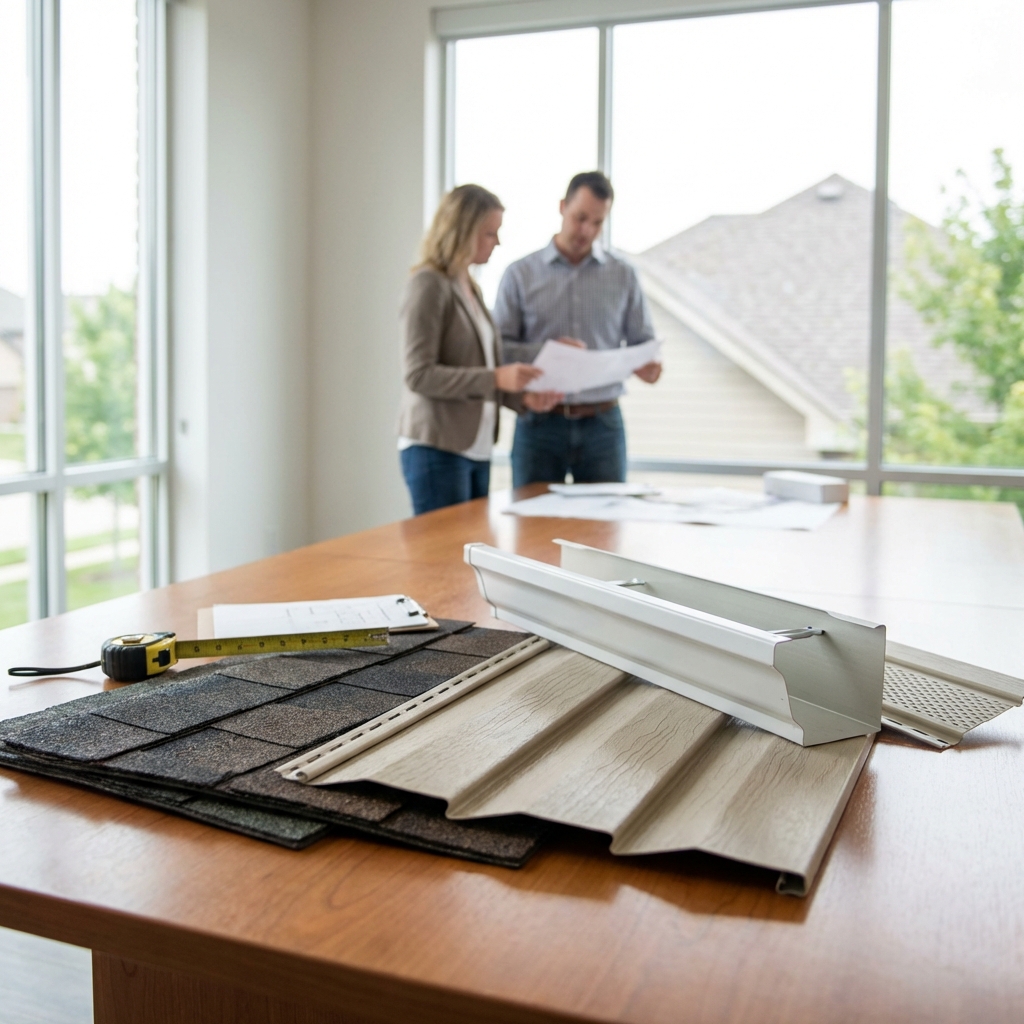
Why Choose Full Exterior Renovation Services
There’s a strong case for addressing gutters as part of a cohesive exterior plan, especially if your roof or siding is due within a few seasons. Integrated upgrades deliver benefits that an add-on cover alone can’t match.
Advantages of a system-level approach:
- Root-cause fixes: Replace soft fascia, correct gutter pitch, verify drip edge, and open soffit vents in one coordinated scope. Chronic overflows and ice issues usually have multiple causes.
- Performance and capacity: Upsize gutters selectively to 6-inch profiles, add 3×4-inch downspouts, and redirect flows away from foundation beds. The result is less splashback on siding and fewer basement moisture concerns.
- Warranty alignment: One project, one responsibility path. When roof edges, gutters, and siding transitions are upgraded together, service calls don’t pinball between vendors.
- Curb appeal: New gutters alongside refreshed cladding can lift the entire elevation. If you’re weighing siding as part of broader home exterior upgrades, consider the durability and aesthetics of engineered wood like LP SmartSide siding.
- Installation efficiency: Crews are already mobilized and staging materials. Combining scopes reduces duplicate setup costs and compresses timelines.
If you’re exploring a larger project, Expert Exteriors outlines warranty topics and planning insights on their siding replacement benefits page, which can be useful even if your primary goal is water management. The principle is the same: good outcomes come from tying components together, not treating each in isolation.
Making the Right Choice for Your Property
Use a structured process to decide between installing a gutter cover, replacing gutters, or coordinating a broader exterior upgrade:
Start with questions about your property:
- How much debris does your roofline see through the year—oaks, maples, pines?
- Are there chronic overflow points at valleys or long roof runs?
- What is the age and condition of your roof, fascia, and soffits?
- Do you experience winter ice issues at the eaves or icicles over entries?
- Are downspouts adequate in number and size, and do they discharge where they should?
Match options to conditions:
- Light debris, healthy gutters: Consider a premium cover for maintenance reduction.
- Moderate to heavy debris, undersized or aging gutters: Replace gutters with 6-inch profiles and 3×4 downspouts; add targeted guards for needle-heavy sections.
- Chronic ice, poor ventilation, fascia rot: Plan a coordinated eaves project, opening soffit vents, repairing fascia, and integrating new gutters with proper drip edge and ice/water shield.
- Upcoming roof or siding project: Bundle scopes to align warranties and finishes; treat gutter strategy as part of the overall design.
Evaluate providers:
- For a product-centric solution like Gutter Helmet, confirm installer expertise, bracket methods, and warranty support. Request references with homes similar to yours.
- For a contractor-led approach, choose exterior renovation contractors that handle roofing, siding, and eaves together, so they can adjust multiple variables at once.
If you’re in Brookfield or nearby communities, confirm your address is within Expert Exteriors’ service area. A local team familiar with oak-heavy streets, lake-effect storms, and winter refreeze patterns will calibrate recommendations more precisely than a one-size-fits-all approach.
Conclusion: Protecting Your Home’s Exterior
Gutter Helmet offers a proven, low-maintenance solution for keeping larger debris out of existing gutters, especially when the gutters are sound and correctly pitched. Expert Exteriors brings a systems mindset, rebuilding the eaves where needed and aligning gutters with roof edges, soffit ventilation, and downspout capacity—an approach that can outperform add-on covers when underlying issues drive overflow.
Your best path depends on roof design, debris load, current gutter condition, and whether broader roof or siding updates are on the horizon. Use this gutter protection systems comparison as a checklist: evaluate capacity, materials, installation methods, maintenance plans, warranties, and the installer’s local track record. In many cases, the right answer is a blended one—new seamless gutters in the highest-load areas, selective guards where trees are dense, and targeted ventilation improvements to tame winter ice.
When you’re ready to explore tailored options, schedule an inspection that looks beyond the gutter edge. A methodical assessment—of pitch, fascia, soffits, valleys, and downspouts—turns guesswork into a clear, long-term plan for your property. In Wisconsin’s climate, that clarity is what keeps water where it belongs and preserves the value and appearance of your home or building for years to come.