

Best Roofing Materials for Wisconsin’s Harsh Cold Climates
Introduction: Why Roofing Material Choice Matters in Wisconsin
Selecting the right roof is more than a design decision in Wisconsin—it is a performance choice that directly affects energy efficiency, durability, and long-term value. From lake-effect snow to polar air outbreaks, local weather swings quickly between heavy precipitation, high winds, and deep freezes. The roof you choose must withstand all of it without sacrificing curb appeal or creating maintenance headaches.
When evaluating roofing materials Wisconsin cold climate property owners often focus on three priorities: resistance to snow and ice, resilience during freeze-thaw cycles, and reliable manufacturer and workmanship warranties. Matching the product to your roof’s slope, architectural style, and usage—residential or commercial—helps ensure you get a system that performs when temperatures plunge and snowpack builds.
Expert Exteriors works with homeowners and business owners across Brookfield and surrounding communities to design and install cold weather roofing options tailored to site conditions and budget. If you’re unsure how local microclimates, roof geometry, or ventilation will influence material choice, a brief assessment of your property and service area can clarify your best next steps.
Understanding Wisconsin’s Climate Challenges for Roofs
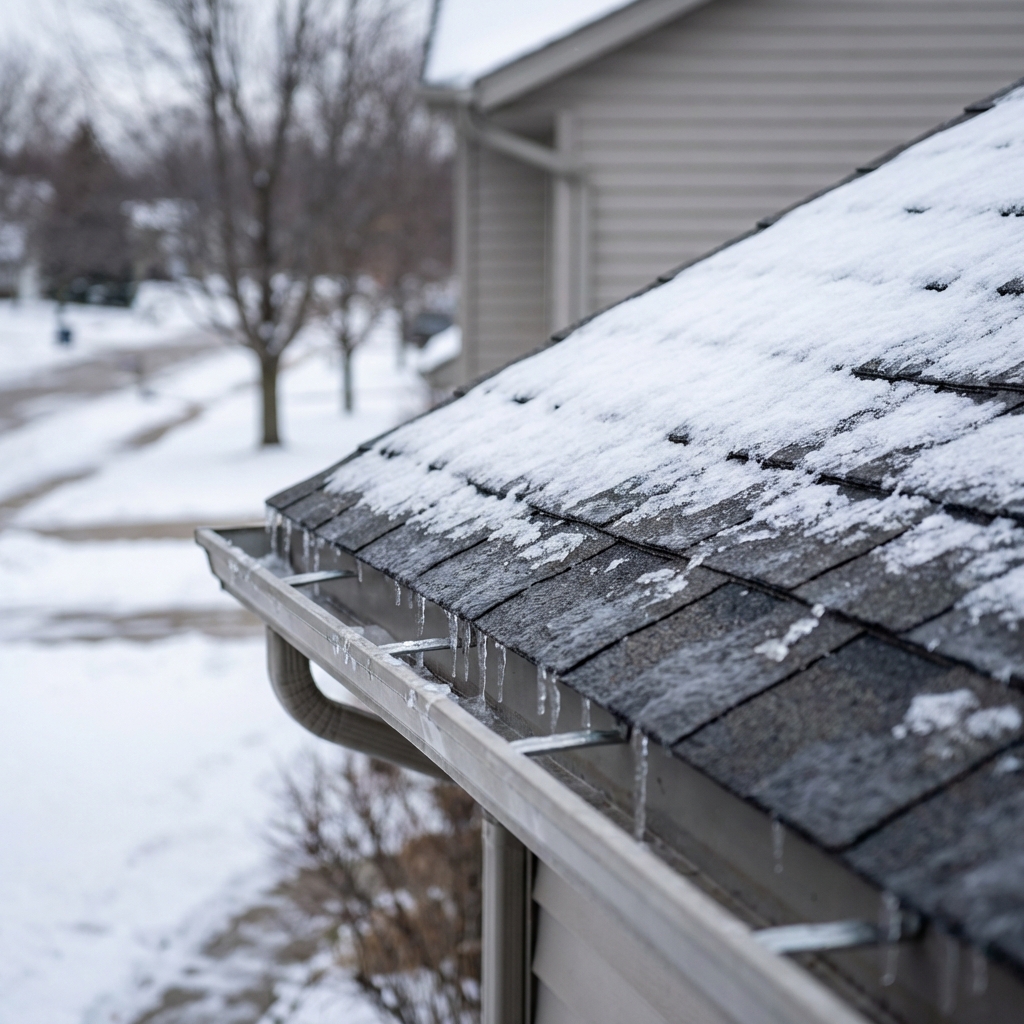
Roofs in Wisconsin face persistent winter stress. Snow totals commonly reach 40–60 inches in many regions, with northern areas seeing substantially more. Rapid temperature shifts from sunny daytime thaws to subfreezing nights trigger meltwater that can refreeze at the eaves. Without the right materials and detailing, ice dams form, forcing water under shingles and into the building envelope.
Wind and cold are equal adversaries. Gusts can lift poorly fastened shingles, while single-digit temperatures make standard asphalt more brittle, increasing the risk of cracking during installation or storms. UV exposure in late winter and spring degrades unprotected asphalt binders, especially where granules have thinned.
Key climate realities to plan for:
- Heavy, drifting snow and prolonged snow loads that stress fasteners and seams
- Repeated freeze-thaw cycles that exploit microcracks and weak seals
- Ice dam potential at eaves and valleys where insulation and ventilation are inadequate
- Occasional hail and wind events that test impact and uplift resistance
- Moisture management challenges in attics and low-slope assemblies
A resilient roof in this environment is the product of three elements working together: a quality material, climate-appropriate underlayments, and detail-focused installation.
Asphalt Shingles: The Popular and Practical Choice
Asphalt shingles remain the most widely installed roof covering in the state for good reason: they deliver reliable protection at an accessible price point and offer plenty of color and profile options. Modern fiberglass-asphalt shingles balance weight and strength, while advanced sealants improve wind resistance once temperatures rise enough for full activation.
To get the most from shingles in harsh winters, look for:
- Polymer-modified asphalt (SBS) for flexibility in cold and enhanced granule retention
- Larger defined nailing zones to ensure proper fastener placement even with gloves
- Algae-resistant granules to reduce streaking in shaded or north-facing areas
- High wind ratings (with a six-nail pattern), particularly on open or ridge-exposed sites
Installation practices matter as much as product choice. Synthetic underlayment performs better than felt when snow gets driven under the shingles, and self-adhered ice-and-water barriers (ASTM D1970) at eaves, valleys, and penetrations help prevent leaks from ice dams. In cold snaps, shingles may not self-seal immediately; strategic hand-sealing at ridge caps and courses exposed to wind reduces uplift risk.
If you’re weighing trade-offs for your home, see our guidance on residential roof replacement to compare profiles and warranty paths.
Metal Roofing: Durability and Performance in Extreme Cold
Metal roofing—especially standing seam systems—excels under snow and ice. Panels shed snow quickly, reducing static load and the risk of ice dam formation. Factory-applied Kynar 500/Hylar finishes resist chalking and fading, while heavier gauges (24–26 ga for steel, or aluminum in coastal/corrosive settings) improve dent resistance.
Considerations for metal in Wisconsin’s winters:
- Panel type: Standing seam conceals fasteners and accommodates thermal movement, offering superior weathering and longevity versus exposed-fastener systems.
- Snow management: Snow guards or fences prevent sudden avalanches over walkways and entrances.
- Underlayment: A high-temperature ice-and-water membrane beneath metal adds redundancy where ice dams and wind-driven snow are likely.
- Fasteners and clips: Stainless or coated fasteners and properly sized clips allow expansion/contraction without loosening, minimizing leak points over time.
Metal often carries Class A fire ratings and can achieve Class 4 impact ratings for hail, making it one of the best roof materials for snow and mixed severe weather. While initial costs run higher than asphalt, metal’s 40–60-year service life and low maintenance requirements deliver strong long-term value, particularly on simple gable or hip roofs where panel runs are efficient.
For low-slope or flat commercial roofs, metal may not be the best match; single-ply systems like EPDM and TPO are purpose-built for these assemblies. Explore our flat and low-slope roofing options if your property includes sections under a 3:12 pitch.
Architectural Shingles: Enhanced Protection and Longevity
Architectural (also called laminated or dimensional) shingles upgrade performance beyond traditional three-tab products. Their multi-layer construction increases thickness and wind resistance, and the varied shadow lines add dimension that suits many Wisconsin home styles.
Cold climate advantages of architectural shingles include:
- Higher tear strength and improved resistance to blow-offs during winter wind events
- Better granule retention, slowing UV degradation after snowmelt exposes the roof
- Compatibility with enhanced nailing patterns for wind ratings up to 130 mph when installed to spec
- Availability of impact-resistant (IR) Class 4 variants that reduce hail damage and may qualify for insurance discounts
Cold weather installation requires care. Most manufacturers recommend ambient temperatures above 40°F for proper sealant activation; when winter work is unavoidable, hand-sealing at ridges, rakes, and high-wind zones, along with staging materials in a warm area, helps prevent brittle fractures. Combined with upgraded ice-and-water shield and closed-cut valley techniques, architectural shingles offer durable roofing for harsh winters at a fraction of metal’s cost.
Impact of Freeze-Thaw Cycles on Roofing Materials
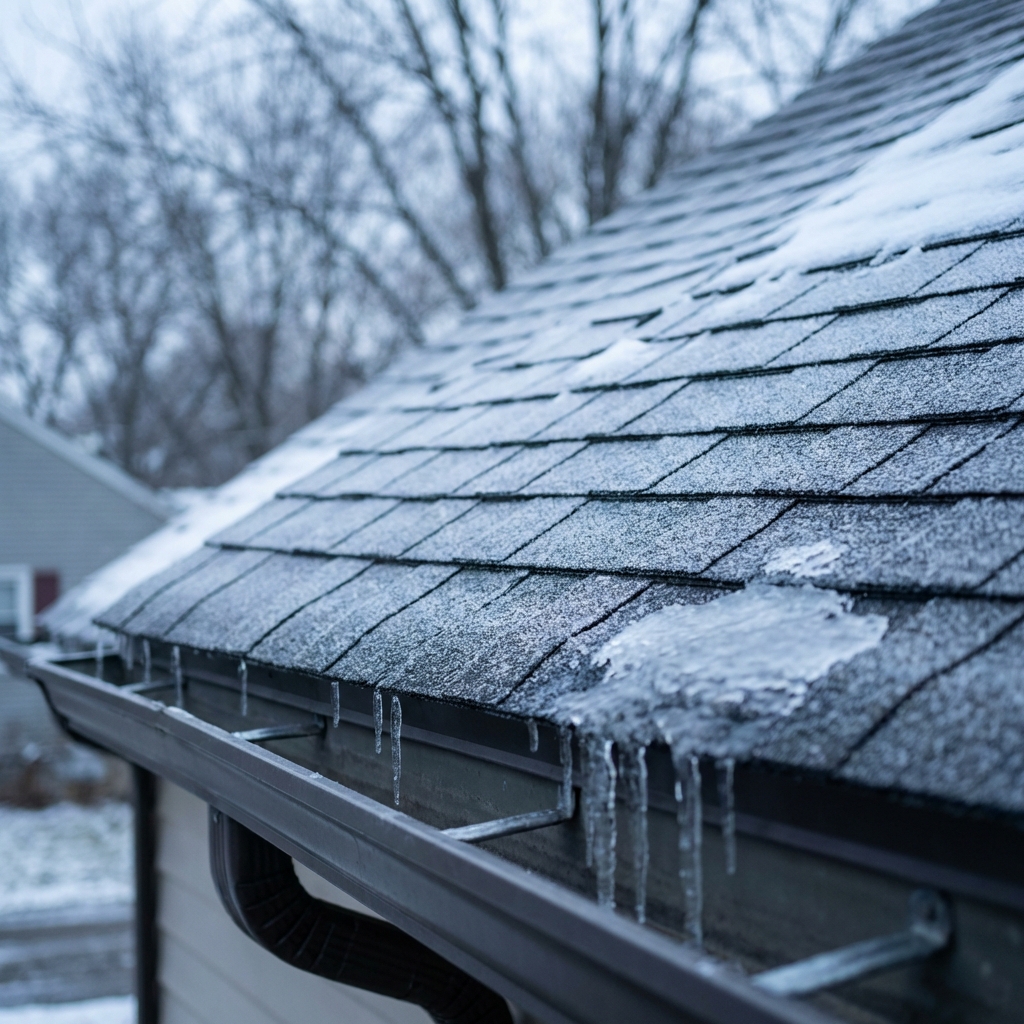
Freeze-thaw cycles are among the most destructive winter forces. Water expands roughly 9% when it turns to ice. When meltwater infiltrates small gaps beneath shingles, around fasteners, or at flashing laps, refreezing pushes materials apart and progressively widens pathways for future leaks.
Common vulnerabilities and how to address them:
- Eaves and valleys: Install self-adhered ice barriers that extend at least 24 inches inside the interior warm wall. In heavy-snow areas, 36–72 inches offers added margin.
- Fasteners: Use ring-shank nails for asphalt shingles and corrosion-resistant hardware for metal to minimize loosening under thermal cycling.
- Flashing details: Step flashing at sidewalls and properly lapped valley metal resist capillary action. Counterflashing over masonry prevents mortar joint seepage.
- Underlayment choice: Synthetic underlayments resist wrinkling and moisture absorption better than felt, maintaining water-shedding performance after repetitive freeze-thaw events.
- Material flexibility: Polymer-modified asphalt shingles and SBS-modified underlayments retain pliability in cold, limiting crack initiation.
For low-slope systems, freeze-thaw can stress seams. TPO and EPDM rely on precise welding or adhesive application within proper temperature windows. Temporary heat and experienced crews reduce cold-weather seam failures. These freeze-thaw resistant roofing practices are central to robust Wisconsin winter roof protection.
Insulation and Ventilation Considerations for Cold Climates
Even the best roof covering will struggle if the assembly below is poorly insulated and inadequately ventilated. Warm air escaping into the attic melts snow on the deck, feeding ice dams at the eaves. Meanwhile, interior moisture can condense on cold sheathing, leading to frost, mold, and premature decking deterioration.
Best-practice strategies:
- Attic insulation: Aim for R-49 to R-60 in vented attics (dense-pack cellulose or blown fiberglass are common). In cathedral ceilings, consider continuous exterior insulation or closed-cell spray foam against the deck to control condensation.
- Air sealing: Seal top plates, recessed lights, plumbing stacks, and attic hatches to prevent heat loss that drives uneven melt.
- Balanced ventilation: Combine continuous soffit intake with a ridge vent to promote airflow under the deck. Target 1:150 net free ventilation area (NFA) or 1:300 with an effective vapor retarder.
- Baffles at eaves: Maintain a clear air channel from soffit to ridge, even with deep insulation, using rigid baffles.
- Vapor control: Smart vapor retarders on the warm side of the assembly help manage seasonal moisture movement.
Gutters, fascia, and soffit systems also affect ice dam behavior. Clean, properly pitched gutters reduce standing meltwater at eaves, and vented soffits enable the intake side of balanced airflow. If your exterior trim is aging or ventilation is inadequate, our gutters and soffits solutions can improve both performance and appearance.
Comparing Cost Versus Long-Term Value of Materials
Price is only one factor; total cost of ownership often tells a different story. Upfront savings can vanish if a roof requires frequent repair or early replacement. Consider material life expectancy, maintenance needs, energy performance, and potential insurance or resale benefits.
Typical installed cost ranges in Wisconsin (project-specific factors vary):
- Architectural asphalt shingles: roughly $4.50–$9.00 per square foot
- Impact-resistant architectural shingles: roughly $5.50–$10.50 per square foot
- Exposed-fastener metal: roughly $6.00–$10.00 per square foot
- Standing seam metal: roughly $10.00–$16.00 per square foot
- EPDM or TPO single-ply (low-slope): roughly $5.50–$10.50 per square foot
Value considerations beyond the price tag:
- Service life: Architectural asphalt often lasts 20–30 years when detailed well; standing seam metal can exceed 40–60 years.
- Risk reduction: Class 4 impact-rated shingles or metal may mitigate hail losses, sometimes qualifying for insurance discounts.
- Energy and comfort: Proper insulation and ventilation often yield more winter energy savings than roof color, but cool finishes can help manage summer heat on sun-exposed roofs.
- Maintenance: Metal and single-ply systems typically need fewer interventions, while shingle roofs benefit from periodic sealing checks and debris removal.
Careful pairing of material with roof slope and site exposure usually delivers the greatest long-term value. If you’re planning a tear-off or overlay, our comprehensive roof replacement services outline how we evaluate deck condition, underlayments, and accessory upgrades to ensure the system performs as intended.
Professional Installation: Essential for Wisconsin Weather Resistance
Product selection is only half the equation. Wisconsin winters demand disciplined installation sequencing, temperature-aware techniques, and meticulous flashing work. Small shortcuts can become costly leaks after the first thaw.
Critical winter-ready practices:
- Weather windows: When installing asphalt in cold weather, crews should store shingles warm, minimize bending, and hand-seal critical courses. For single-ply membranes, respect welding and adhesive temperature ranges, using temporary heat as needed.
- Ice barrier coverage: Extend self-adhered underlayment far enough upslope at eaves and wrap inside corners, valleys, and penetrations. Drip edge should be installed over the ice barrier at rakes and under it at eaves for correct water shedding.
- Fastening details: Use six nails per shingle in high-wind zones, driven flush—not overdriven—into the manufacturer-specified nailing zone. For metal, verify clip spacing and panel allowances for thermal movement.
- Flashing and transitions: Step flashing at sidewalls, kick-out flashing where walls meet eaves, and properly lapped valley metal are non-negotiable. On chimneys, use counterflashing cut into masonry.
- Ventilation setup: Calculate intake and exhaust balance, protect intake with baffles, and avoid mixing ridge vents with power fans that can short-circuit airflow.
Working with a contractor who understands roofing materials Wisconsin cold climate best practices ensures the system, not just the shingles or panels, is optimized for freeze, wind, and snow.
Maintenance Tips for Cold Climate Roof Longevity
Preventive care extends roof life and reduces emergency calls during winter storms. A few targeted habits keep systems tight through the harshest months.
A seasonal maintenance checklist:
- Pre-winter inspection: Assess shingles or panels, flashings, and sealants. Replace damaged boots around vents and test attic ventilation paths.
- Gutter care: Clean gutters and downspouts before freeze-up to limit ice buildup at eaves. Verify proper pitch and secure hangers.
- Snow management: Use a roof rake with a non-scratching edge to remove the lower 3–4 feet of snow after major storms, especially on roofs with a history of ice dams. Avoid chipping ice; call a pro if dams persist.
- Attic monitoring: After cold snaps, check for frost on sheathing or damp insulation. Address air leaks and ventilation imbalances promptly.
- Post-storm check: Look for lifted shingles, missing ridge caps, or displaced snow guards. On metal roofs, inspect exposed fasteners on accessory trim and resecure if needed.
When exterior trim or drainage systems age out, timely upgrades to soffits, fascia, and gutters can mitigate ice dams and enhance airflow, complementing the roof above. If your system is past its service life, consider proactive replacement rather than recurring patchwork to restore reliable Wisconsin winter roof protection.
Conclusion: Selecting the Right Material for Your Wisconsin Property
There is no single “best” roof for every building in a state as climatically varied as Wisconsin. Instead, match material to slope, exposure, and use:
- Steep-slope homes seeking value: Architectural asphalt offers balanced performance and aesthetics, with impact-rated options for hail-prone areas.
- Homes prioritizing longevity and snow shedding: Standing seam metal delivers exceptional durability, especially with well-planned snow retention.
- Low-slope and commercial roofs: EPDM or TPO single-ply membranes provide proven, cold-ready performance when installed within temperature guidelines and detailed at seams and penetrations.
Whichever system you choose, invest in the assembly: robust underlayments, proper ventilation and insulation, and code-aligned ice barrier coverage. The result is a roof that weathers freeze-thaw cycles, resists wind uplift, and preserves interior comfort while protecting your property’s value.
Expert Exteriors helps property owners in Brookfield and nearby communities evaluate cold weather roofing options with site-specific recommendations and clear project scopes. If you’re ready to compare materials, timelines, and budgets, start with an instant roof quote or reach out to discuss your goals. The right design, materials, and installation will keep your home or business secure—season after season—through Wisconsin’s harshest winters.