
7 Best Exterior Remodeling Companies in Wisconsin: Our Complete Selection Guide
1. Proven Track Record and Local Experience
When you hire an exterior remodeling company, you’re betting on their experience navigating Wisconsin’s specific climate challenges. Snow load, freeze-thaw cycles, and intense UV exposure demand contractors who know what works in our region.
Local experience matters for practical reasons. A roofing contractor familiar with Brookfield properties understands drainage patterns in our neighborhoods, knows which materials perform best in our winters, and has relationships with local suppliers. National chains often send crews unfamiliar with regional construction standards, leading to installations that don’t account for local building codes or weather patterns.
We’ve built our reputation by working exclusively in Wisconsin communities. Our crews have tackled hundreds of residential and commercial projects across varying architectural styles and property conditions. When we install your roof or siding, we’re drawing on years of direct experience with properties just like yours, not generic training that applies nationwide.
How many years has the contractor operated in Wisconsin? Ask for specific examples of completed projects in your area. Request references from homeowners whose properties match your own. A contractor genuinely established locally will have stories about specific neighborhoods, common issues they’ve solved, and relationships with local building departments.
What to do next: Call 2-3 local contractors and ask them to describe three recent projects they’ve completed within your zip code. Their ability to recall specific addresses, architectural details, and neighborhood challenges reveals genuine local experience.
2. Comprehensive Service Offerings and Expertise
Property owners often make a critical mistake: they hire separate contractors for roofing, siding, gutters, and trim work. This creates coordination headaches, warranty gaps, and inconsistent craftsmanship across your exterior.
The strongest exterior remodeling companies offer integrated services that work together. Roof replacement coordinates with fascia and soffit installation. Siding projects align with gutter placement and window trim. When one team manages multiple exterior systems, they ensure proper flashing, drainage, and aesthetic cohesion that wouldn’t exist if you’d hired three separate specialists.
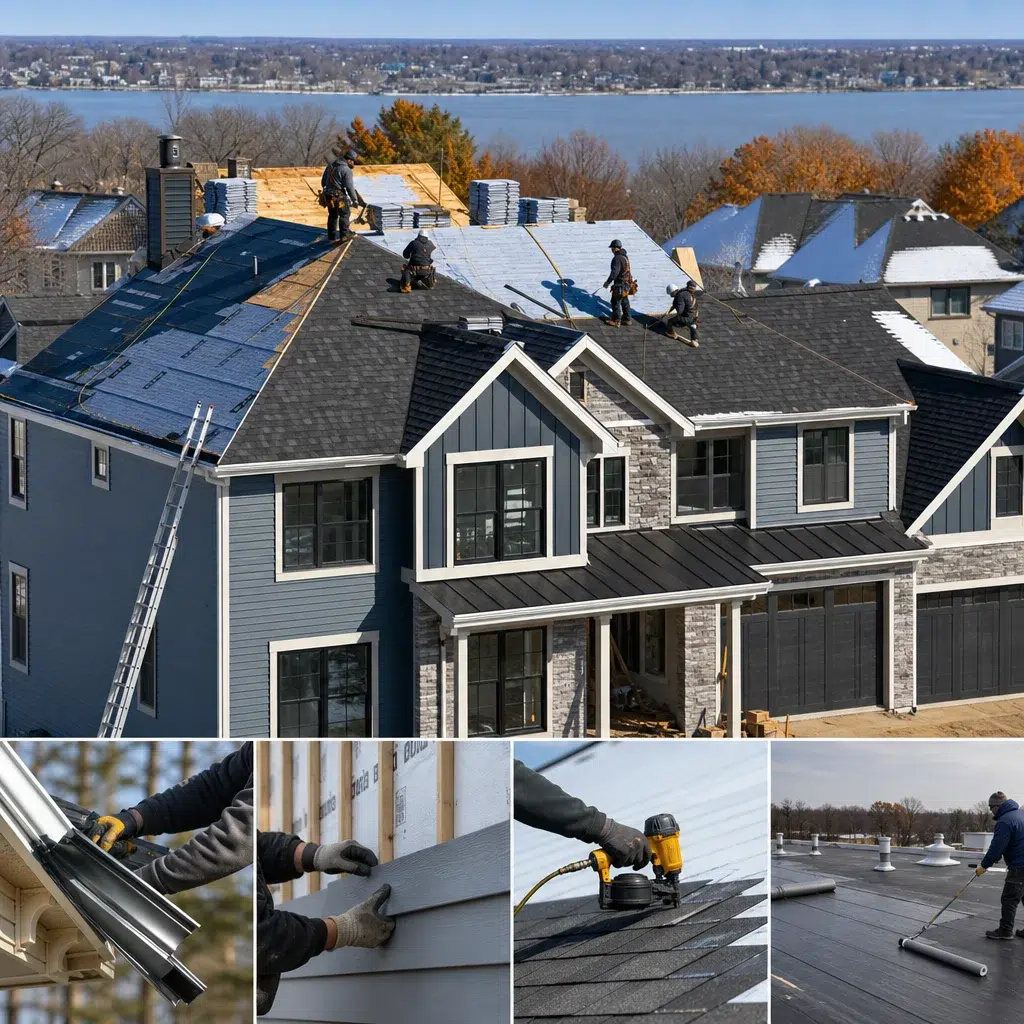
Our comprehensive exterior remodeling services cover residential roof replacement, commercial roofing including EPDM and TPO systems, vinyl siding, LP SmartSide installation, fascia, soffit, and gutter replacement. This means every exterior component we touch integrates seamlessly with the others, and you maintain a single point of accountability.
When evaluating contractors, ask what services they offer in-house versus what they subcontract. Do they handle roofing and siding with their own crews, or do they bring in outside specialists? Companies that subcontract heavily often struggle with quality control and communication gaps. Check whether they can manage a full exterior project from start to finish without coordinating between multiple vendors.
What to do next: Request a list of services from each contractor you’re considering. Circle the services you need, then ask which ones they perform with their own employees versus subcontractors. Prioritize contractors who handle at least 70% in-house.
3. Quality Materials and Installation Standards
Material choice determines how long your investment lasts and how well your property withstands Wisconsin winters. Budget-grade materials might seem attractive initially, but they fail faster and cost more over time.
We specify materials that perform in harsh climates. For residential roofing, architectural asphalt shingles provide proven winter performance and aesthetic appeal. For siding, we recommend LP SmartSide over basic vinyl because it resists impact damage from Wisconsin hail and ice, and resists warping from moisture. For commercial properties, EPDM and TPO flat roof systems provide durability that cheaper alternatives can’t match.
Installation standards matter as much as materials. A premium shingle installed incorrectly won’t last. We follow manufacturer specifications precisely: proper nail placement, correct spacing, appropriate underlayment, and flashing methods that prevent leaks before they start. Our crews receive ongoing training on new products and evolving best practices.
Ask any contractor about their material supplier relationships and their training programs. Do they partner with premium manufacturers? Do their installers carry certifications? What warranty do the manufacturers provide, and can the contractor actually deliver on it? Companies that work with quality material manufacturers have more at stake in installation quality, since faulty work damages their supplier relationships.
What to do next: Ask each contractor to identify the material brands they prefer and why. Request a photo of their crew performing installation work on a similar project. Professional contractors keep project documentation showing proper installation methods.
4. Licensing, Bonding, and Insurance Verification
Before hiring any contractor, verify their credentials. Wisconsin requires specific licensing for roofing and construction work, and bonding protects you if the contractor fails to complete the job or causes damage.
Licensing ensures the contractor has passed competency requirements and keeps current with changing codes. Bonding provides financial protection if they disappear mid-project or leave your property damaged. General liability insurance covers accidents that occur during work, and workers’ compensation insurance protects both their crew and you from liability if someone gets injured.
Many property owners skip this step, thinking they’re just saving time. That’s dangerous. An unlicensed or uninsured contractor might initially quote lower, but if something goes wrong, you’re personally liable. We maintain current Wisconsin roofing and construction licenses, comprehensive general liability coverage, and bonding on all major projects.
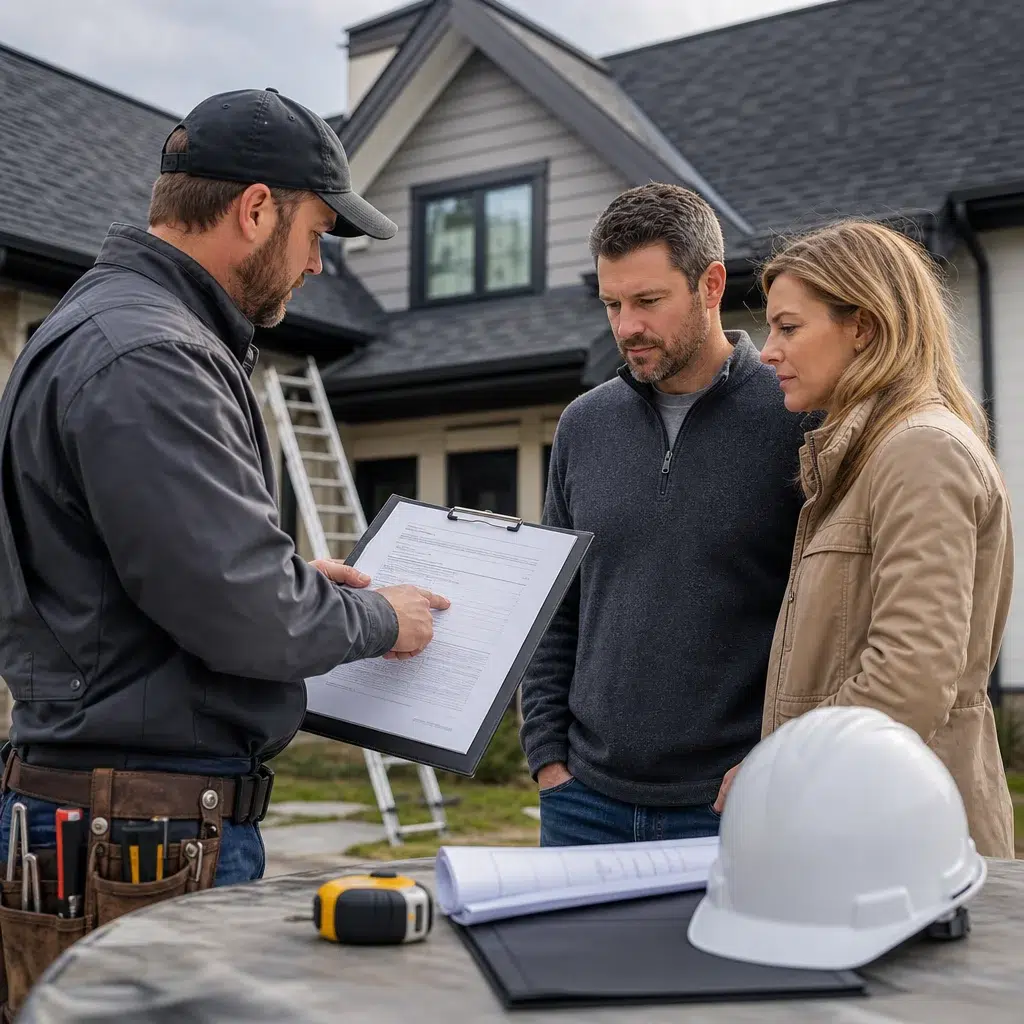
Never hire based on a verbal promise of credentials. Ask for documentation: license numbers, current insurance certificates, proof of bonding. Verify these with Wisconsin’s Department of Safety and Professional Services. Call their insurance carrier to confirm coverage is active. Take 10 minutes to check, and you’ll sleep better knowing you’re protected.
What to do next: Create a simple spreadsheet listing each contractor’s license number, insurance company, and policy expiration date. Verify each directly with the Department of Safety and Professional Services website (you can check licenses in 2 minutes online). This single step eliminates most problem contractors.
5. Transparent Pricing and Detailed Estimates
Vague pricing is a red flag. If a contractor quotes roof replacement at “around $8,000 to $12,000,” they’re either unclear on the scope of work or they’re planning surprise charges later.
We provide detailed written estimates that break down materials, labor, permit costs, and any other charges. You see exactly what you’re paying for, and the final bill matches the estimate. This transparency builds trust because you’re not surprised, and we’re not working with unrealistic price commitments that force corner-cutting.
The estimate should specify roof pitch, square footage, material brands and grades, removal and disposal costs, and timeline. For siding projects, it should detail the type and grade of material, labor for removal and installation, trimming, painting, and landscaping protection. A detailed estimate takes time to prepare because it requires actual site measurement and careful calculation.
When comparing quotes from multiple contractors, you’re often comparing different specifications. One contractor might quote premium architectural shingles while another quotes standard three-tab shingles. One might include full fascia replacement while another skips it. Get apples-to-apples quotes by asking each contractor to bid on identical materials and scope. Then you can confidently choose based on price and contractor quality rather than hidden variables.
What to do next: Prepare a one-page scope document listing exact materials (brand and grade), square footage or linear footage being replaced, and services included. Email this to three contractors and ask for detailed estimates matching your specifications. You’ll immediately see which contractors are willing to be specific and which ones avoid detail.
6. Customer Reviews and Testimonials
Past customers reveal how a contractor actually performs once they start work. Online reviews show patterns: Do customers consistently praise craftsmanship, or do they complain about delays? Do they feel the contractor respected their property, or was there a mess and broken promises?
We encourage property owners to check our reviews on Google, the Better Business Bureau, and local directories. You’ll see feedback from real customers who hired us for roof replacements, siding projects, and comprehensive exterior work. These aren’t cherry-picked testimonials; they’re unfiltered customer experiences.
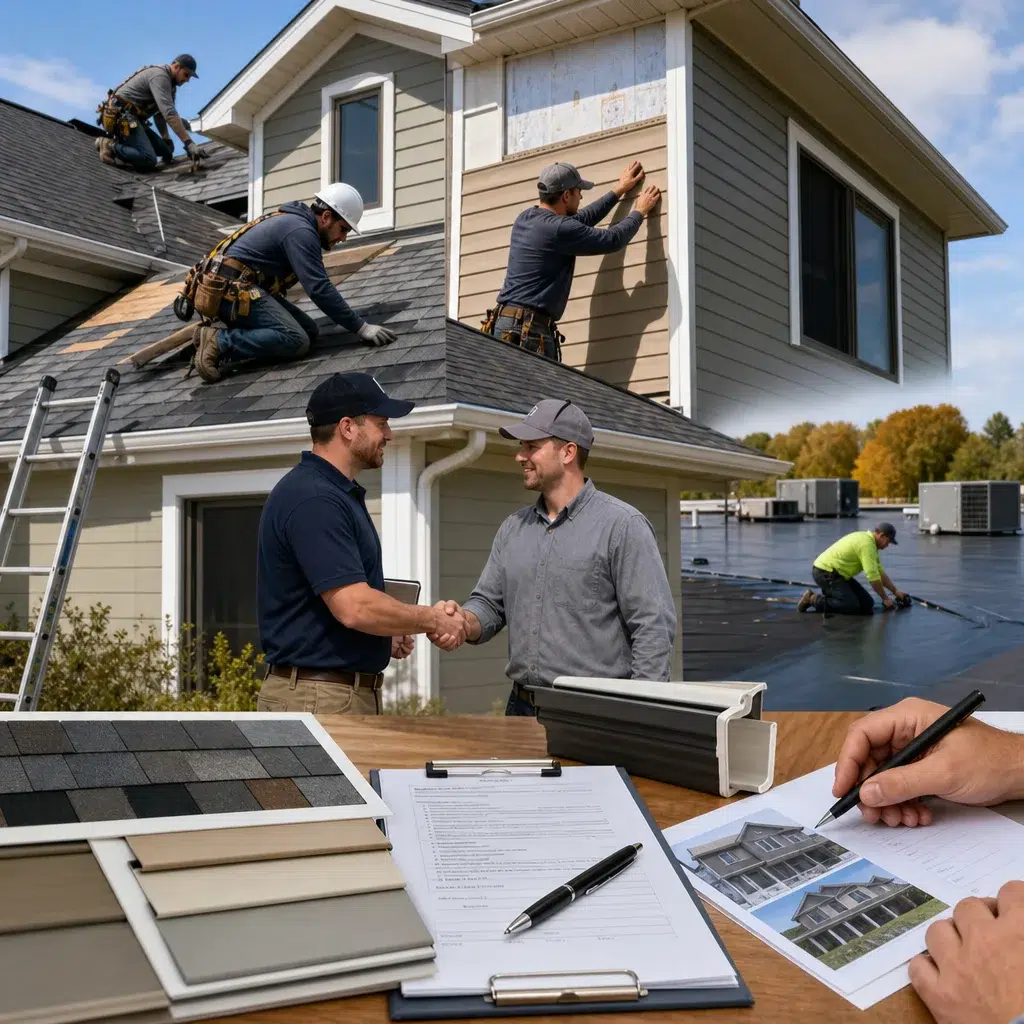
Pay attention to specific complaints or praises. A single negative review might be an outlier, but if multiple customers mention a contractor damaged landscaping or left the site messy, that’s a pattern. Similarly, if multiple customers mention the crew was professional and the work exceeded expectations, that consistency is meaningful.
Ask the contractor directly for references. A confident contractor will happily provide names of recent customers who’ll speak honestly about their experience. Call those references and ask specific questions: Did the project finish on time? Was the crew respectful? Did the final result match the estimate? Did the contractor address any issues that came up? These conversations often reveal more than written reviews.
What to do next: Read at least 15 recent reviews (not just the most recent 3). Look for mentions of specific behaviors: crew professionalism, timeline adherence, cleanliness, and communication. When patterns emerge across multiple reviews, you’re seeing the contractor’s actual operating style.
7. Warranty Coverage and Long-Term Support
Your exterior remodeling project isn’t truly complete until the contractor stands behind their work for years. Warranty coverage protects your investment and shows the contractor’s confidence in their craftsmanship.
Material warranties come from manufacturers and typically run 20-50 years depending on the product. Installation warranties come from the contractor and typically run 5-10 years. The strongest contractors offer both clear material coverage and strong installation warranties.
We back our work with comprehensive warranties that cover both materials and labor. If a shingle fails prematurely due to installation error, we replace it. If flashing causes a leak within our warranty period, we fix it at no cost. This protection gives our customers confidence that we’re accountable for quality.
Many contractors offer thin warranties because they expect customers never to call if something goes wrong. Strong contractors offer robust coverage because they have confidence in their installations. Read the warranty details carefully: What does it actually cover? What’s excluded? Does it transfer if you sell the property? Does the contractor remain in business to honor claims after the project ends?
After a major remodeling project, we stay available for questions, adjustments, and future maintenance. Your roof or siding doesn’t need to be perfect forever, but when issues arise, you should be able to reach someone who installed it and who’s willing to help.
What to do next: Request the actual warranty document from each contractor (not just a summary). Read the exclusions section, which often contains surprises. Ask whether the warranty transfers to new owners if you sell the property, and whether the contractor will remain accessible if they’re sold or change ownership.
For further reading: Commercial roof replacement, LP SmartSide siding guide, Local roofing vs Home Depot.