
5 Warning Signs Your Commercial TPO or EPDM Roof Needs Repair
Why Commercial Roof Problems Demand Immediate Attention
Your commercial roof is your building’s first line of defense against Wisconsin weather. When issues develop, they rarely stay small. A minor leak today becomes water damage, structural compromise, and business interruption tomorrow. We’ve seen countless property owners delay repairs only to face six-figure replacement costs that could have been prevented.
The difference between catching a problem early and waiting comes down to thousands of dollars and months of operational headaches. Commercial roofs protect your inventory, equipment, and employees. Water intrusion can damage merchandise, compromise electrical systems, and create unsafe conditions. Beyond the physical damage, roof failures disrupt business operations and damage your property’s market value.
Regular inspections and prompt repairs aren’t optional for responsible commercial property management. They’re strategic investments that extend roof life, maintain building integrity, and protect your bottom line.
Understanding TPO and EPDM Roofing Systems
TPO (thermoplastic polyolefin) and EPDM (ethylene propylene diene terpolymer) dominate the commercial roofing landscape for good reason. Both materials offer durability, weather resistance, and cost-effectiveness compared to traditional built-up roofs or metal alternatives.
TPO sheets come in light colors that reflect solar heat, lowering cooling costs during hot months. The material is flexible, energy-efficient, and relatively straightforward to repair when seams or edges are compromised. EPDM, the older rubber-based option, excels at stretching and adapting to temperature changes. Its dark color provides excellent waterproofing but can absorb more heat.
Both systems fail in predictable ways. Understanding these failure patterns helps you spot trouble before it becomes catastrophic. The warning signs we discuss next apply to either material, though the underlying causes may differ slightly.
Sign 1: Visible Pooling Water and Drainage Issues
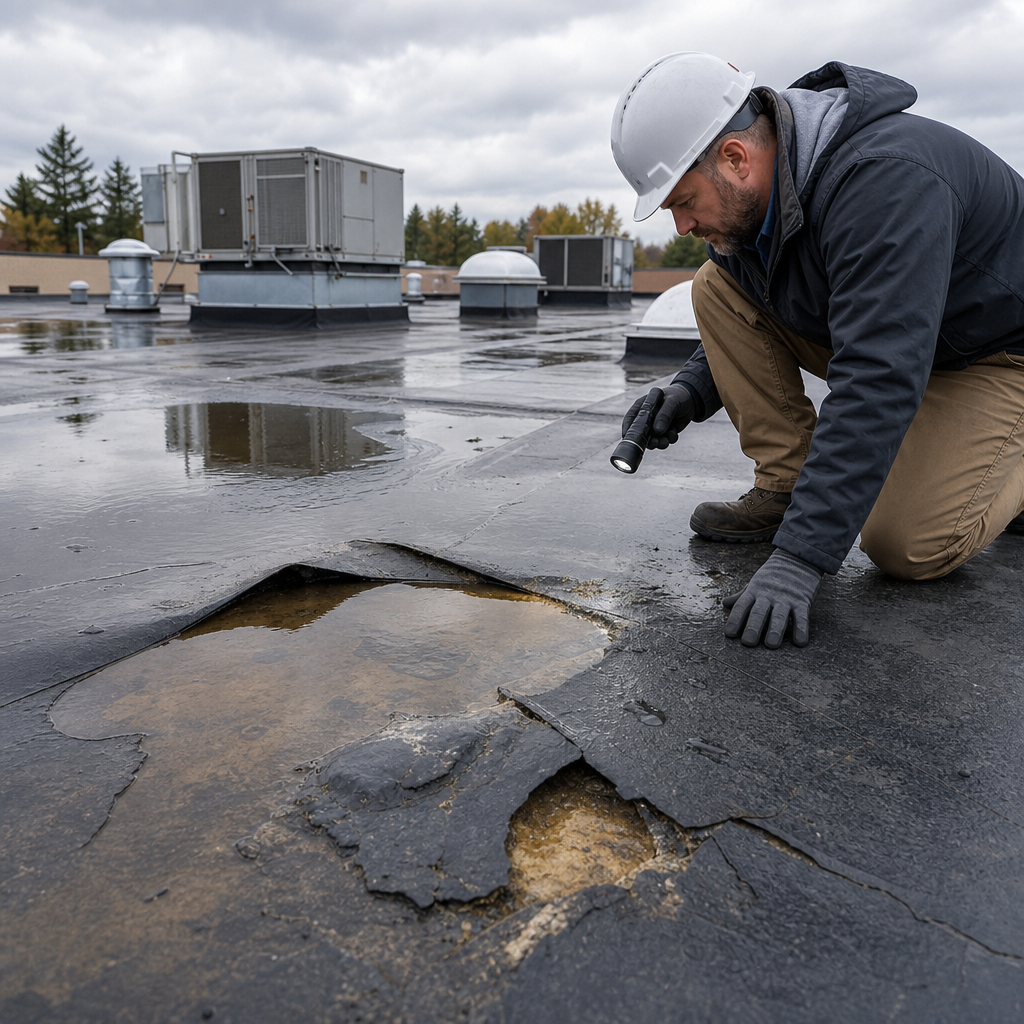
Standing water on your flat or low-slope roof is never normal. Pooling happens when drainage systems clog, when the roof settles unevenly, or when membranes sag. Even an inch or two of standing water creates problems.
Water weight stresses the roof structure over time. More immediately, stagnant water breaks down TPO and EPDM membranes faster than flowing water ever would. UV exposure combined with prolonged moisture accelerates deterioration. Algae and debris accumulation compounds the issue by trapping moisture.
Look for these drainage red flags:
- Water remaining 48 hours after rain stops
- Visible debris blocking gutters, downspouts, or internal drains
- Sagging areas where water collects repeatedly
- Discoloration or staining around pooling zones
Address pooling immediately by clearing debris and inspecting drain functionality. If pooling persists after cleaning, structural settling may be the culprit. That’s when professional assessment becomes essential.
Sign 2: Blistering, Cracking, or Seam Separation
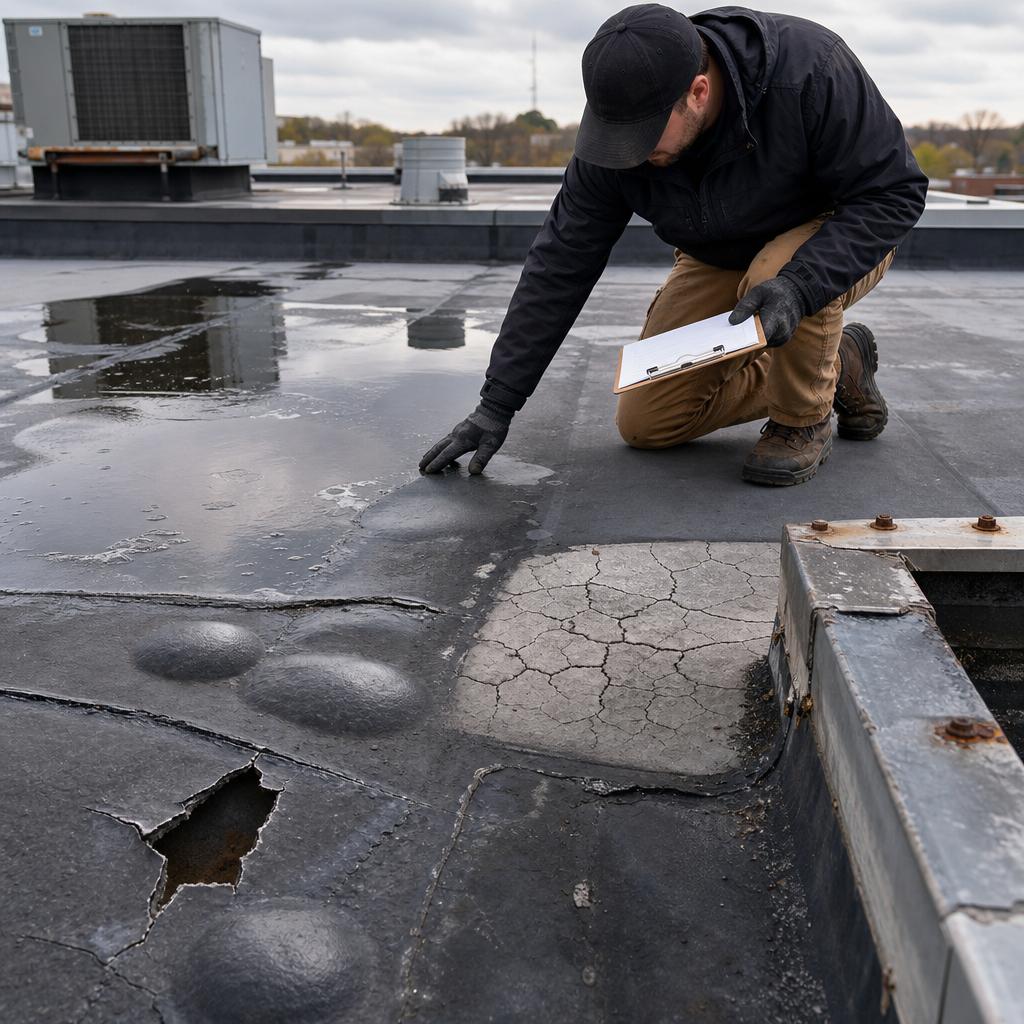
Blistering appears as raised, bubble-like formations across the membrane surface. These form when moisture gets trapped between roof layers or between the membrane and substrate. Temperature fluctuations cause internal air and moisture to expand and contract, pushing the membrane upward.
What makes blistering dangerous is what happens next. The bubble weakens the membrane, making it prone to rupture. One puncture in a blister releases trapped moisture into underlying layers, accelerating deterioration throughout the roof assembly. We often find that small blisters we notice in spring have become serious damage by summer.
Cracking develops from age, temperature stress, or material brittleness. EPDM becomes more prone to cracking as it ages, particularly in areas experiencing significant UV exposure. TPO cracks often indicate improper installation, low-quality materials, or seam failure nearby.
Seam separation is perhaps the most urgent warning sign. These are the points where two membrane sheets overlap and are sealed together. When seams separate, water flows directly into the substrate, spreading damage rapidly through the entire roof system. Visible gaps, lifting edges, or water stains along seam lines require immediate attention.
Sign 3: Punctures, Tears, and Membrane Damage
Sharp objects, foot traffic, weather events, or equipment placement create punctures and tears in membrane materials. Even small holes allow water infiltration. What starts as a pinhole often expands due to water pressure, material degradation, or additional damage occurring nearby.
Identifying punctures early makes repairs simple and affordable. A small tear sealed promptly might cost $500 to repair. That same tear left unattended for months can require replacing a 20-by-30 foot section of membrane at five to ten times the cost.
Common sources of puncture damage in our Brookfield area include:
- Debris from storms or falling branches
- Damaged areas from HVAC maintenance or equipment installation
- Foot traffic from maintenance personnel in heavy boots
- Thermal stress causing material brittleness and splitting
- Rodent or wildlife damage
Walk your roof perimeter and accessible areas quarterly. Look for discoloration, patched areas, or visible damage. If you notice punctures, don’t attempt DIY patching. Temporary patches often fail, and improper application traps moisture beneath the patch, worsening the problem.
Sign 4: Deteriorating Flashing and Fastener Corrosion
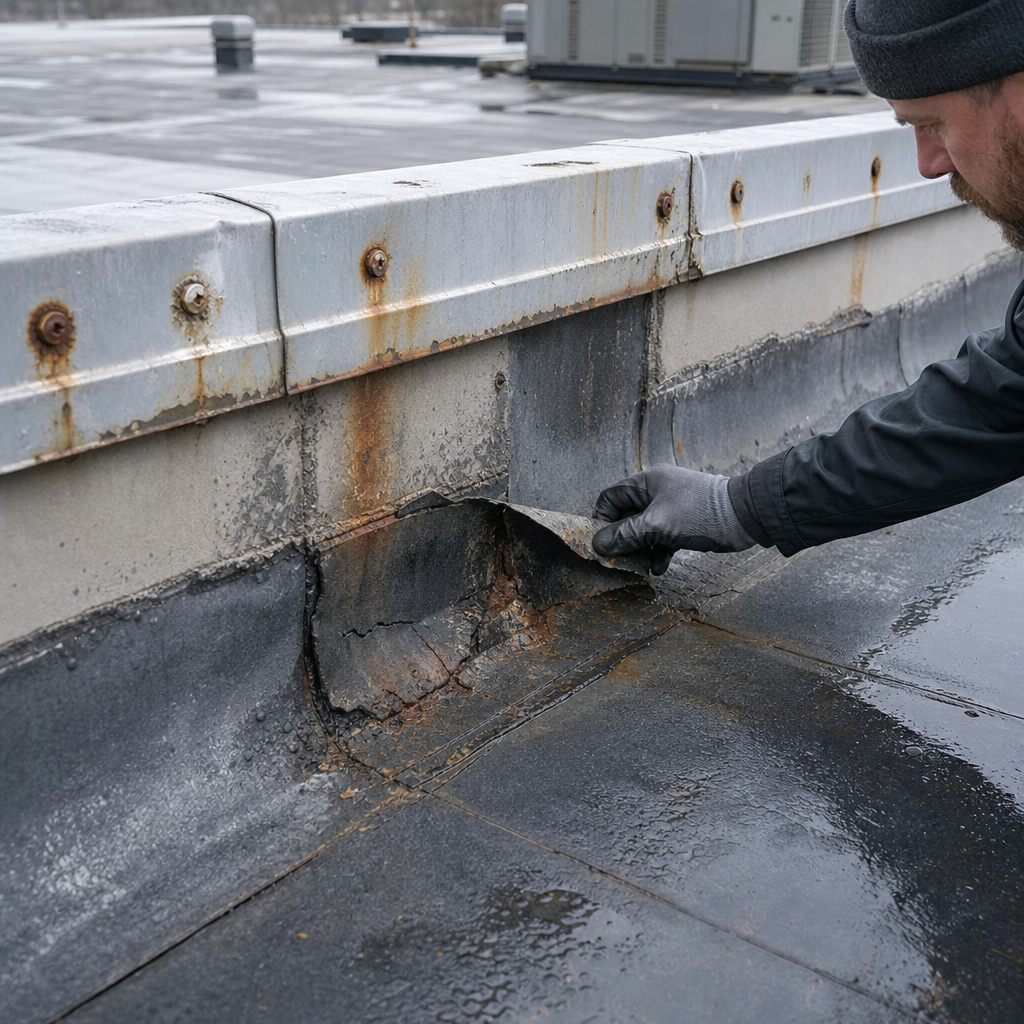
Flashing is the metal trim that seals where the roof meets walls, chimneys, vents, and other penetrations. It’s the critical transition point that diverts water away from vulnerable areas. When flashing deteriorates, water doesn’t simply leak in at the roof itself; it penetrates directly into wall assemblies and structural framing.
Fasteners holding flashing and membrane in place corrode over time, particularly in Wisconsin’s freeze-thaw cycles. As fasteners rust, their hold loosens. Flashing lifts away from the roof surface, creating channels for water entry. We’ve found that many commercial roof failures trace back to deteriorating flashing that was overlooked for too long.
Signs of flashing problems include:
- Visible rust on metal trim
- Gaps between flashing and roof membrane
- Separation at corners or where flashing meets the wall
- Water stains on interior walls below penetrations
- Deteriorated sealant around fasteners
Once fasteners corrode and flashing separates, repair involves removing damaged sections and installing new flashing with stainless steel fasteners. It’s less expensive than membrane replacement but requires precision work to avoid creating new leaks during the repair process.
Sign 5: Increased Energy Bills and Interior Leaks
A roof in decline costs you money in ways you might not immediately recognize. Compromised membrane sections and failed insulation allow heat transfer you’re paying for through higher utility bills. In summer, cool air escapes; in winter, heat does. These losses accumulate to hundreds of dollars monthly on large commercial buildings.
Interior leaks are the unmistakable sign that damage has progressed beyond the membrane. Water staining on ceiling tiles, paint bubbling, or mold growth indicates water has penetrated the entire roof assembly. By this point, the cost extends beyond roofing repairs to include interior damage remediation.
Don’t wait for visible water damage. If you notice unexplained increases in HVAC costs or suspect roof-related issues, arrange an inspection immediately. Early detection prevents cascading damage that affects multiple building systems.
The Cost of Delaying Commercial Roof Repairs
The mathematics of roof repair delay are simple and brutal. A $2,000 repair today becomes a $15,000 repair in six months. That becomes a $100,000 roof replacement within two years if ignored long enough. Water damage spreads through insulation, structural members, and building interiors, multiplying costs exponentially.
Beyond direct repair costs, delayed repairs create hidden expenses. Mold remediation, structural repairs, interior restoration, business interruption, and temporary relocations of operations stack up quickly. Insurance coverage often excludes damage from neglected maintenance, leaving you fully responsible for costs that could have been prevented.
Property valuations reflect roof condition. Commercial buyers and lenders conduct inspections. A roof documented as failing reduces property value and makes financing difficult. Prompt maintenance protects your asset’s worth and marketability.
Our Expert Assessment and Repair Process
When you contact us, we begin with a comprehensive roof inspection. Our team documents all visible damage, takes measurements, and identifies root causes. We don’t simply list problems; we explain what caused them and what solutions make sense for your specific situation.
We then develop a detailed repair plan prioritized by urgency and cost-effectiveness. Some issues demand immediate attention. Others can be incorporated into planned maintenance cycles. We provide clear recommendations so you can make informed decisions.
Our repair process follows industry standards. We use matching membrane materials, weather-appropriate sealants, and corrosion-resistant fasteners. We ensure all work complies with manufacturer specifications and building codes. Every repair gets documented so you have a clear maintenance history for future reference or resale purposes.
We’re prepared to handle everything from simple patching to large membrane replacement projects. Whether your roof is TPO, EPDM, or another commercial system, we bring decades of Wisconsin weather experience to the work.
How Expert Exteriors Protects Your Commercial Investment
Protecting your commercial property isn’t just about fixing problems when they occur. It’s about partnering with professionals who understand long-term property stewardship. We approach each commercial roofing project with the perspective of someone protecting a significant asset.
Our commercial roofing guide outlines best practices for both new installations and ongoing maintenance. We develop customized maintenance schedules that catch problems early and extend roof life. For property owners considering commercial roof replacements, we guide you through material selection, cost analysis, and long-term performance expectations.
We also understand that business continuity matters. We schedule work to minimize disruption. We coordinate with your operations team, protect sensitive areas, and communicate clearly throughout every project. Your business doesn’t pause for roof repairs, and we respect that reality.
Next Steps: Schedule Your Professional Roof Inspection
Don’t let warning signs turn into catastrophic failures. If you’ve noticed any of the issues discussed here, your next step is straightforward: contact us for a professional inspection.
Our team can be in Brookfield and surrounding areas within days. We’ll thoroughly assess your roof’s condition, explain what we find in clear terms, and recommend a repair strategy that aligns with your property’s needs and budget.
Schedule your roof inspection by calling us or visiting our website to request a free evaluation. We’ll document the current state of your roof and provide actionable recommendations. Early detection prevents expensive problems. Let’s protect your commercial investment together.
For further reading: Comprehensive roof services.