
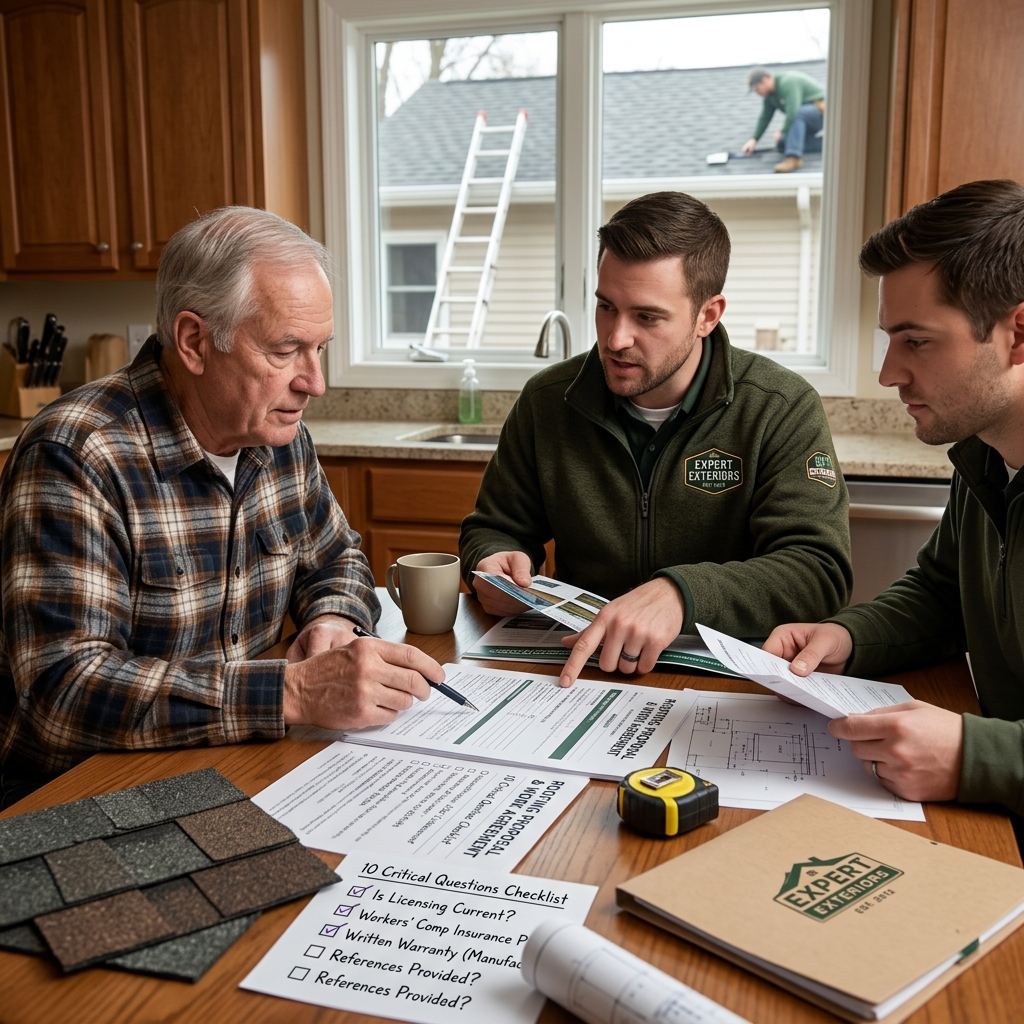
10 Critical Questions to Ask Your Roofing Contractor Before Hiring
Why Hiring the Wrong Roofing Contractor Costs You More Than Money
Choosing a roofing contractor is one of the most important decisions you’ll make as a property owner. Your roof protects everything you care about, so the person or team installing it deserves serious vetting. Before you sign any contracts or hand over a deposit, you need answers to the right questions. This guide covers the critical questions that separate reliable contractors from those who’ll leave you frustrated, out of pocket, or worse.
A cheap roofing bid might look attractive upfront, but poor workmanship can lead to leaks, premature deterioration, and costly repairs within just a few years. Beyond the financial hit, you’re dealing with the stress of water damage, interior repairs, and the headache of trying to hold an unresponsive contractor accountable.
We’ve seen homeowners and business owners in Brookfield and surrounding areas lose tens of thousands of dollars because they hired someone based solely on price. A contractor who cuts corners on installation, uses subpar materials, or disappears after the job is done creates problems that haunt you for years.
The real cost of hiring the wrong contractor includes:
- Emergency repairs due to leaks or installation defects
- Voided manufacturer warranties because of improper installation
- Structural damage from water intrusion
- Disputes over warranty coverage and liability
- Stress and wasted time managing problems
Investing time now to ask the right questions protects your property, your peace of mind, and your long-term investment. The goal is to find a contractor who combines quality craftsmanship, transparent communication, and accountability.
Understanding Your Roofing Contractor’s Experience and Credentials
Experience matters significantly in roofing. This trade requires specific skills: proper flashing installation, ventilation management, slope calculations, and understanding how different materials perform in Wisconsin’s climate. A contractor with 5 years of hands-on experience will diagnose and solve problems differently than someone with 20 years.
Ask your potential contractor:
- How long have you been in the roofing business?
- Do you perform the work yourself or primarily supervise crews?
- What specific training have you completed for different roofing systems?
- What certifications do you hold (manufacturer certifications, GAF Master Elite, Owens Corning Platinum, etc.)?
- Can you describe your experience with the specific roofing material we’re considering?
Certifications from major manufacturers like GAF, Owens Corning, or Tamko indicate that a contractor has been trained and vetted by the manufacturer itself. These programs require ongoing education and maintain strict standards. If a contractor holds these credentials, they’re demonstrating commitment to staying current with best practices and product specifications.
A contractor’s experience with your specific material matters too. Installing architectural shingles differently than basic 3-tabs, and EPDM flat roofing systems require different expertise than pitched residential shingles. If your property needs flat and low-slope roofing, confirm the contractor has successfully completed multiple projects using that exact system.
Action item: Ask to speak with someone who performed the actual installation work, not just the sales representative.
Verifying Proper Licensing Insurance and Bonding Requirements
Wisconsin requires roofing contractors to be licensed. This means they’ve passed exams demonstrating knowledge of building codes, safety, and industry standards. A valid license is your first verification that someone is legitimate and accountable.
Never skip this step. A licensed contractor can be pursued legally if something goes wrong. An unlicensed contractor leaves you with limited recourse.
Beyond the license, ask about:
- Current Wisconsin roofing contractor license number and expiration date
- General liability insurance (minimum $500,000 to $1,000,000)
- Workers’ compensation insurance for all employees
- Roofing insurance that covers both labor and materials
- Surety bond or performance bond details
Insurance protects you if someone is injured on your property or if materials are damaged. Workers’ compensation covers employees, not you, but it’s a sign of professional operation. A contractor without workers’ comp might try to bill you for employee injuries, or worse, you could face liability.
Ask to see current certificates of insurance directly from the insurance company. Don’t accept photocopies; request that the insurance company send verification to you. Verify the policy is active and covers roofing work specifically.
A performance bond guarantees that the contractor will complete the job. If they abandon the project, the bonding company will step in and ensure completion. This is especially valuable for larger commercial projects.
Action item: Call your homeowner’s or commercial property insurance agent and ask if they have preferred contractor lists or recommendations for your roofing project.
Asking About Materials and Product Warranties We Recommend
The materials your contractor uses directly impact how long your roof lasts and how well it performs. Cheaper materials might come with shorter warranties or won’t withstand Wisconsin winters as effectively.
Ask:
- What roofing materials do you recommend for my roof, and why?
- What warranty does the manufacturer offer on materials?
- What workmanship warranty do you provide?
- Are there material options at different price points, and what are the differences?
- How do you handle warranty claims?
We recommend materials from manufacturers with strong track records and meaningful warranties. A 30-year material warranty is only valuable if the manufacturer will honor it when needed. Research the brand’s reputation for honoring claims.
Workmanship warranties are equally important. Many roofing jobs fail not because the material is bad, but because installation was incorrect. A contractor’s warranty on their workmanship shows confidence in their craftsmanship. At Expert Exteriors, we back our work with 15-year workmanship warranties on full roof replacements and siding replacements, which means you have recourse if something goes wrong due to how we installed it.
Don’t conflate a material warranty with a workmanship warranty. The manufacturer covers defects in the product; the contractor covers defects in installation. You need both.
Action item: Request warranty documents in writing and ask the contractor to explain what’s covered and what’s excluded before signing.
Understanding Our Roofing Process and Project Timeline
The roofing process involves more than just nailing shingles. A thorough approach includes inspection, preparation, proper ventilation, flashing, and cleanup. Cut-rate contractors often skip or shortcut these steps.
Ask your contractor:
- What does your pre-installation inspection include?
- How do you prepare the roof surface?
- What’s your approach to ventilation and moisture management?
- How do you handle flashing, valleys, and roof penetrations?
- How long will the project take?
- Will you work around weather delays, and how are those handled?
A detailed inspection reveals hidden damage, rot, or structural issues. Skipping this step means problems get covered up instead of fixed. A quality contractor will inspect underlayment, check for rot in the decking, and assess ventilation before starting.
Realistic project timelines matter too. A residential roof typically takes 1-3 days depending on size and complexity. If a contractor promises it in one day, they’re likely rushing. A rush job means less attention to detail and higher defect risk.
Weather plays a real factor in Wisconsin. Rain or temperature extremes can affect installation quality. Ask how the contractor handles weather delays and whether they’ll shut down work during poor conditions or push through anyway.
Action item: Request a detailed project timeline in writing that includes start date, expected completion, and contingencies for weather or unexpected issues.
Reviewing References and Completed Projects in Your Area
References from past customers provide real-world insight into whether a contractor delivers on promises. A contractor proud of their work will gladly provide references and show photos of completed jobs.
Ask:
- Can you provide at least 3-5 recent references from similar projects?
- May I see photos of completed projects in Brookfield or nearby areas?
- Can I visit a recently completed job (with the homeowner’s permission)?
- How long have your recent customers been satisfied with the work?
- What happens if a customer finds a problem after the job is complete?
Call those references. Ask specific questions: Did the contractor show up on time? Was the site kept clean? Was the final product what they expected? Would they hire the same contractor again?
Look for projects similar to yours. A reference from a commercial flat roof project is more relevant to your commercial property than a residential shingle job. Projects in your area are especially valuable since they show the contractor understands local climate, building codes, and inspector expectations.
If a contractor resists providing references or seems evasive, that’s a red flag. Confidence in past work shows in willingness to back it up with customer testimonials.

Action item: Ask references one final question: “Is there anything you wish you’d asked the contractor before hiring them?” Their answer often reveals the most important concerns.
Discussing Pricing Structure and Payment Terms Upfront
Price should never be your only factor, but it’s still important. A detailed estimate tells you what you’re paying for and helps you compare contractors fairly.
Ask:
- Can you provide a detailed written estimate?
- What’s included in the quote (materials, labor, disposal, permits)?
- Do you charge for the inspection and estimate?
- What’s your payment schedule (deposit, milestones, final)?
- What payment methods do you accept?
- What happens if costs exceed the estimate?
A detailed estimate breaks down materials, labor, and other costs so you understand what each dollar covers. Vague estimates hide problems. If you get three estimates and one is significantly lower, ask specifically what’s different. They might be using cheaper materials, less experienced labor, or planning to cut corners.
Typical payment structures include an initial deposit (often 10-25%), milestone payments as work progresses, and a final payment upon completion. Avoid contractors who demand full payment upfront. A contractor asking for 50% down before starting work is taking excessive risk on your dime.
Get payment terms in writing. What happens if the contractor runs out of money mid-project? What’s your recourse if they take your deposit and never start? Written terms protect both of you.
Action item: Ask whether the contractor’s quote is fixed or if change orders will apply to unexpected issues discovered during removal.
Confirming Cleanup and Site Management Procedures
A professional roofing job creates mess: torn-off shingles, nails, debris, and dust. How a contractor handles this reflects their overall professionalism.
Ask:
- How do you protect my landscaping and property during work?
- What’s your debris disposal and cleanup process?
- Do you perform daily cleanup or only final cleanup?
- Are there any additional cleanup fees?
- How do you handle roofing nails and metal debris?
- What’s your timeline for final cleanup and inspection?
Reputable contractors use drop cloths, tarps, and containment systems to protect your property. They clean up daily to minimize disruption and safety hazards. Scattered roofing nails can puncture tires and injure people months after the project ends.
Ask about magnetic sweeps for nails and how debris is disposed of. Some contractors charge extra for hazardous waste removal or debris hauling. Knowing these costs upfront prevents surprise bills.
Final cleanup and inspection should be thorough. Once you sign off on completion, that’s typically when the warranty period officially begins. Walk the property together, check gutters for debris, and confirm the area is safe before the contractor leaves.
Action item: Schedule a final walkthrough with the contractor to document completion using photos and confirm all cleanup is finished.
Evaluating Communication Standards and Customer Support
Communication often determines customer satisfaction more than the actual workmanship. A contractor who keeps you informed, answers questions promptly, and manages expectations reduces stress significantly.
During your initial conversations, assess:
- How quickly do they respond to calls and emails?
- Who will be your primary point of contact during the project?
- How frequently will you get updates?
- What’s the best way to reach them with urgent issues?
- How do you handle customer concerns or complaints?
- What’s your process for addressing defects post-completion?
The contractor you speak with during sales should be accessible during the project. If a different person takes over, ask to meet them. You want to know who to call if something goes wrong.
Request a written communication plan. Some contractors provide daily updates via email or photos. Others check in less frequently. Knowing expectations prevents frustration when you haven’t heard from anyone in a week.

Post-project communication matters too. If you notice an issue weeks or months later, will the contractor respond to warranty claims? Ask how they handle warranty service and what the process looks like.
Action item: Ask the contractor for their communication protocol in writing and request contact information for both the project manager and company leadership.
Understanding Permit Requirements and Code Compliance
Roofing permits exist for good reasons. They ensure work meets building codes, protects you from liability, and provides official documentation of the work for insurance and future sales. Some contractors skip permits to save money and time. Don’t let them.
Ask:
- Will you pull the necessary permits for this project?
- What inspections are required?
- Who handles communication with inspectors?
- What’s the timeline for permits and inspections?
- Are permit costs included in the quote or additional?
- How do you ensure work meets current building codes?
Wisconsin has specific roofing codes that govern ventilation, underlayment, fastening patterns, and material specifications. Building inspectors verify compliance. A contractor familiar with local codes won’t view inspections as obstacles; they’ll expect them.
If a contractor suggests skipping permits to save money, walk away. This creates liability for you, voids warranties, and can create problems when selling the property. Buyers and their lenders require proper permits and inspections.
Ask what inspector you should expect and what the inspection process involves. Some contractors coordinate everything; others expect you to handle inspections. Clarify upfront.
Action item: Contact your local building department and ask what permits are required for your roofing project and what the inspection process involves.
How Expert Exteriors Answers Every Contractor Question
At Expert Exteriors, we understand that hiring a roofing contractor is a significant decision, so we welcome these questions and answer them thoroughly.
We’re a family-owned, licensed roofing and exterior remodeling company serving Brookfield and surrounding areas since our founding. Our team performs the actual work rather than outsourcing to subcontractors, which means consistent quality and accountability. We hold manufacturer certifications from major brands and maintain active general liability and workers’ compensation insurance.
Our typical roofing process includes a detailed pre-installation inspection using drone technology to assess condition before you commit. We prepare surfaces properly, address ventilation and moisture issues, install flashing correctly, and clean up thoroughly daily. We provide 15-year workmanship warranties on full roof replacements, backed by written documentation.
We pull all necessary permits and coordinate with local inspectors, handling code compliance as part of our standard process. Our estimates are detailed and fixed, with transparent communication about any changes discovered during removal. We’re available for questions via phone or email and assign a dedicated project manager for each job.
You can review our completed projects and speak with satisfied customers throughout the area. We stand behind our work and handle warranty claims promptly because our reputation depends on your satisfaction.
Action item: Get an instant roof replacement quote to compare our pricing and approach with other contractors you’re vetting.
Taking the Next Step Toward Your Roof Replacement
You now have the framework for evaluating any roofing contractor. Use this list as a checklist, and don’t hesitate to ask follow-up questions if answers seem incomplete or evasive.
The best contractors expect these questions and answer them confidently. If someone becomes defensive or dismissive, that tells you something important about how they’ll handle concerns during or after the project.
Start by gathering at least three detailed estimates from contractors who meet your initial criteria. Compare not just price, but materials, warranties, timelines, and communication plans. Call their references and ask the tough questions. Then choose the contractor who combines quality, experience, accountability, and fair pricing.
If you’d like to discuss your roofing project with our team at Expert Exteriors, we’re here to help. Learn more about our residential roof replacement services or contact us for a consultation. We’re happy to answer every question on this list and provide references from satisfied customers throughout Brookfield and the surrounding area.
Your roof protects your most valuable asset. Take the time to hire someone who will protect it well.